Early Signs of Prostate Cancer in Men
- Home
- Uncategorized
- Early Signs of Prostate Cancer in Men
Transforming Lives with Compassionate Cancer Care and Surgical Excellence!


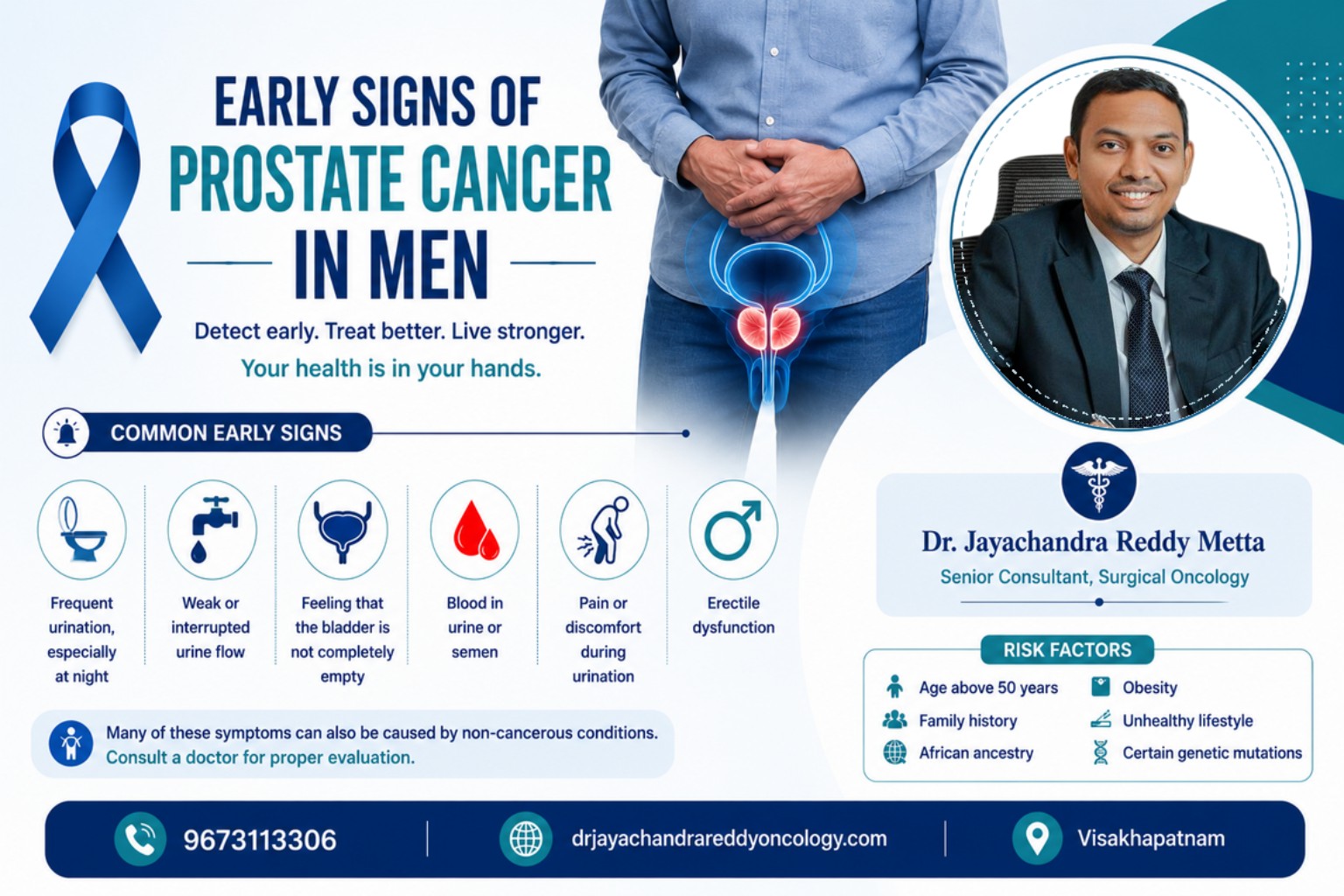
Infographic by Dr. Metta Jayachandra Reddy – Cancer Doctor in Vizag
Early Signs of Prostate Cancer in Men
Prostate cancer is one of the most common cancers affecting men worldwide. The prostate is a small gland located below the bladder that plays an important role in the male reproductive system. While prostate cancer often develops slowly, early detection can significantly improve treatment outcomes and quality of life. One challenge is that prostate cancer may not cause noticeable symptoms in its early stages. However, recognizing warning signs and seeking timely medical evaluation can make a crucial difference.
What Is Prostate Cancer?
Prostate cancer occurs when abnormal cells in the prostate gland begin to grow uncontrollably. Although the risk increases with age, particularly after 50, younger men can also develop the disease.
Regular health checkups and awareness of symptoms are essential for early diagnosis.
Early Signs of Prostate Cancer
1. Frequent Urination
One of the earliest symptoms may be the need to urinate more often, especially during the night. Men may find themselves waking up multiple times to use the bathroom.
2. Difficulty Starting Urination
A weak urinary stream or trouble initiating urination can occur when the enlarged prostate affects the flow of urine.
3. Weak or Interrupted Urine Flow
Some men notice that their urine stream becomes weaker than usual or stops and starts during urination.
4. Feeling That the Bladder Is Not Completely Empty
Even after urinating, there may be a persistent sensation that the bladder has not been fully emptied.
5. Blood in the Urine or Semen
Although less common, blood in the urine or semen should never be ignored and requires prompt medical evaluation.
6. Pain or Burning During Urination
Discomfort while urinating can sometimes be associated with prostate problems, including cancer.
7. Erectile Dysfunction
Difficulty achieving or maintaining an erection may occasionally be linked to prostate cancer and should be discussed with a healthcare provider.
8. Pain in the Lower Back, Hips, or Pelvis
Persistent pain in these areas may occur if the cancer has spread beyond the prostate and should be evaluated promptly.
Who Is at Higher Risk?
Several factors can increase the risk of prostate cancer:
➜ Age above 50 years
➜ Family history of prostate cancer
➜ African ancestry
➜ Obesity
➜ Unhealthy lifestyle habits
➜ Certain genetic mutations
Men with these risk factors should consider regular screening discussions with their healthcare provider.
When Should You See a Doctor?
You should seek medical attention if you experience:
➜ Frequent urination, especially at night
➜ Difficulty passing urine
➜ Weak urine stream
➜ Blood in urine or semen
➜ Persistent pelvic, hip, or back pain
➜ Unexplained urinary symptoms
Many of these symptoms can also be caused by non-cancerous prostate conditions, but only a medical evaluation can determine the cause.
How Is Prostate Cancer Diagnosed?
Doctors may recommend:
➜ Prostate-Specific Antigen (PSA) blood test
➜ Digital Rectal Examination (DRE)
➜ MRI scans
➜ Prostate biopsy when necessary
These tests help determine whether cancer is present and guide treatment planning.
Importance of Early Detection
When detected early, prostate cancer is often highly treatable. Early diagnosis can:
➜ Improve survival rates
➜ Expand treatment options
➜ Reduce complications
➜ Preserve quality of life
Regular health screenings and awareness of symptoms remain the most effective tools for early detection.
Prostate cancer often develops silently, but certain warning signs should never be ignored. Changes in urination, blood in urine or semen, persistent pain, or erectile difficulties warrant medical evaluation.
If you notice any of these symptoms, consult a qualified oncology specialist like Dr. Jayachandra Reddy Metta. Early diagnosis and timely treatment can make a significant difference in outcomes and long-term health.
UPHOLDING INTEGRITY IN MEDICAL PRACTICE
Copyright 2026 | Dr. Jayachandra Reddy | All Rights Reserved | Designed by BrandUp Vizag

WOULD YOU LIKE TO BECOME ONE OF OUR DONORS?
