Radiation Therapy: Common Questions Answered
- Home
- Uncategorized
- Radiation Therapy: Common Questions Answered
Transforming Lives with Compassionate Cancer Care and Surgical Excellence!


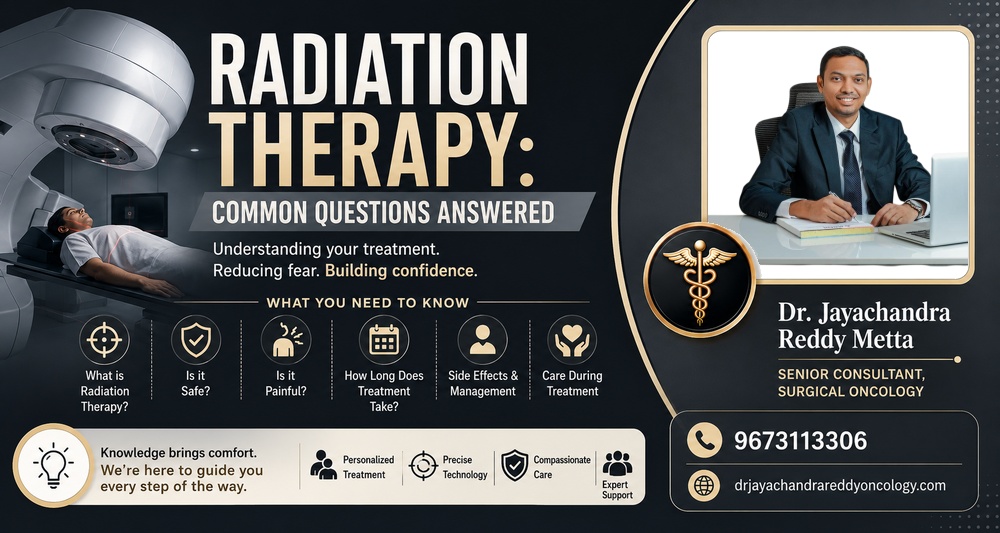
Visual Representation by Dr. Metta Jayachandra Reddy – Cancer Specialist in Vizag
Radiation Therapy: Common Questions Answered
Hearing the words "You need radiation therapy" can feel overwhelming. Many patients immediately have questions about what radiation treatment involves, whether it is painful, and what side effects to expect. The good news is that modern radiation therapy is highly precise, carefully planned, and used successfully to treat many types of cancer. Understanding the facts can help reduce anxiety and prepare you for treatment.
What Is Radiation Therapy?
Radiation therapy is a cancer treatment that uses high-energy radiation beams to destroy cancer cells or stop them from growing.
It may be used:
➜ As the main treatment for certain cancers
➜ Before surgery to shrink a tumor
➜ After surgery to destroy remaining cancer cells
➜ Alongside chemotherapy
➜ To relieve symptoms in advanced cancers
The treatment is carefully targeted to minimize damage to healthy tissues.
Is Radiation Therapy Painful?
No.
Radiation treatment itself is completely painless. You will not see or feel the radiation while the machine is delivering treatment.
Most treatment sessions last only a few minutes, and patients are able to return home the same day.
Will I Become Radioactive?
This is one of the most common misconceptions.
For external beam radiation therapy (the most common type), you do not become radioactive. It is completely safe to be around your family, children, and friends after treatment.
Only certain specialized internal radiation treatments involve temporary precautions, and your doctor will explain these if they apply to you.
How Long Does Treatment Take?
The duration depends on:
➜ The type of cancer
➜ The stage of the disease
➜ The treatment goal
➜ Your overall health
Some patients require only a few sessions, while others may receive treatment over several weeks.
Your radiation oncologist will create a personalized treatment plan.
What Are the Common Side Effects?
Side effects vary depending on the area being treated.
Some common temporary side effects include:
➜ Fatigue
➜ Skin irritation in the treated area
➜ Mild redness or dryness
➜ Hair loss only in the treated area
➜ Difficulty swallowing (for throat treatment)
➜ Diarrhea (for pelvic treatment)
Many side effects improve gradually after treatment is completed.
Can I Continue My Normal Activities?
Many patients continue their daily routine, including work and light physical activity, during radiation therapy.
However, fatigue is common, so getting enough rest, eating well, and staying hydrated are important.
Always follow your healthcare team’s advice regarding activity levels.
Is Radiation Therapy Safe?
Yes.
Modern radiation therapy uses advanced imaging and treatment planning to accurately target tumors while protecting surrounding healthy tissues as much as possible.
Your treatment plan is customized specifically for you.
What Should I Do During Treatment?
To help your body cope with treatment:
➜ Eat a nutritious, balanced diet.
➜ Stay well hydrated.
➜ Get adequate rest.
➜ Avoid smoking and alcohol.
➜ Follow your doctor’s skin care instructions.
➜ Attend every scheduled treatment session.
Consistency is important because missing treatments may reduce effectiveness.
When Should You Contact Your Healthcare Team?
Inform your healthcare team if you experience:
➜ Severe pain
➜ Persistent vomiting
➜ High fever
➜ Difficulty breathing
➜ Significant skin reactions
➜ Difficulty eating or drinking
➜ Any new or worsening symptoms
Early management of side effects often improves comfort and treatment outcomes.
Frequently Asked Questions
Can radiation therapy cure cancer?
For many cancers, radiation therapy can be curative, especially when the disease is detected early. In other cases, it helps control the disease or relieve symptoms.
Will I lose all my hair?
No. Hair loss occurs only in the area receiving radiation. Radiation to the breast or abdomen, for example, will not cause hair loss on the scalp.
Can I eat normally during treatment?
Most patients can continue eating normally, although dietary adjustments may be recommended depending on the treatment area.
Can I drive myself home after treatment?
In most cases, yes. Radiation therapy itself does not affect your ability to drive unless advised otherwise by your doctor.
Radiation therapy has become one of the safest and most effective treatments for many types of cancer. While it is natural to have concerns, understanding the treatment process can help you feel more confident and prepared. Never hesitate to ask questions—your healthcare team is there to guide and support you throughout your cancer journey.
If you have been advised to undergo radiation therapy or would like a second opinion about your cancer treatment, Dr. Jayachandra Reddy Metta, Senior Consultant in Surgical Oncology, is committed to providing compassionate, evidence-based cancer care. He works closely with multidisciplinary oncology teams to ensure every patient receives a personalized treatment plan designed for the best possible outcome. Early consultation and informed decision-making can make a significant difference in your cancer journey.
UPHOLDING INTEGRITY IN MEDICAL PRACTICE
Copyright 2026 | Dr. Jayachandra Reddy | All Rights Reserved | Designed by BrandUp Vizag

WOULD YOU LIKE TO BECOME ONE OF OUR DONORS?
