Family History and Cancer Risk: What You Should Know
- Home
- Uncategorized
- Family History and Cancer Risk: What You Should Know
Transforming Lives with Compassionate Cancer Care and Surgical Excellence!


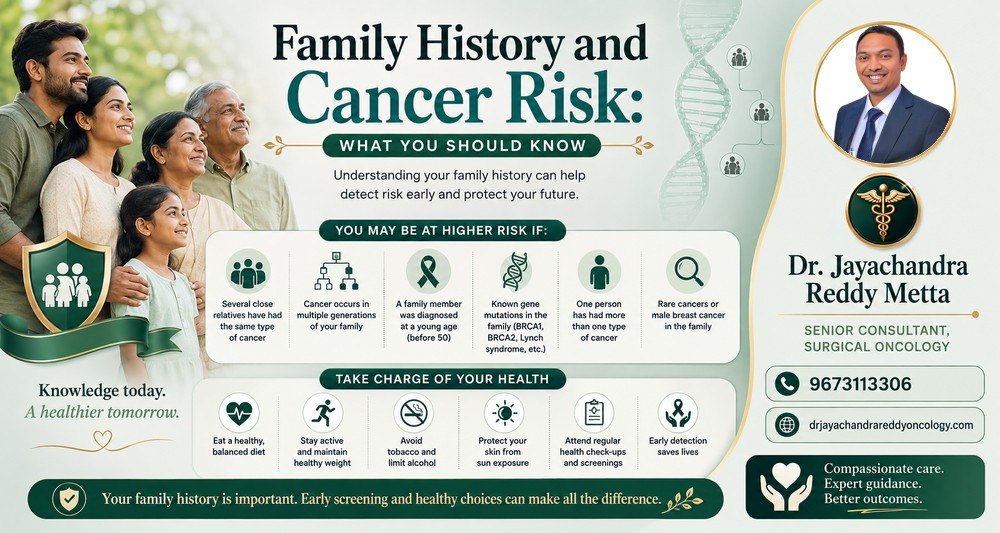
Infographic by Dr. Jayachandra Reddy – Cancer Specialist in Vizag
Family History and Cancer Risk: What You Should Know
Many people worry that having a family member with cancer means they are destined to develop the disease themselves. While a family history can increase your risk for certain cancers, it does not mean you will definitely develop cancer. Understanding your family history is an important step in assessing your risk and taking preventive measures. In many cases, early screening and healthy lifestyle choices can significantly reduce the impact of inherited risk.
Does Cancer Run in Families?
Most cancers are not inherited.
In fact, only about 5–10% of all cancers are caused by inherited genetic changes (mutations). The remaining cancers develop due to aging, lifestyle factors, environmental exposures, or random genetic changes that occur during a person’s lifetime.
However, some families do carry inherited gene mutations that increase the risk of developing certain cancers.
Which Cancers Are More Likely to Be Inherited?
Some cancers are more commonly associated with inherited genetic mutations, including:
➜ Breast cancer
➜ Ovarian cancer
➜ Colorectal (colon) cancer
➜ Prostate cancer
➜ Pancreatic cancer
➜ Melanoma (skin cancer)
➜ Thyroid cancer (in certain inherited syndromes)
Having one of these cancers in the family does not automatically mean the cancer is hereditary, but it may warrant further evaluation.
When Should You Be Concerned?
You may have a higher inherited cancer risk if:
➜ Several close relatives have had the same type of cancer.
➜ Cancer occurs in multiple generations of your family.
➜ A family member was diagnosed at a young age (usually before 50).
➜ One person has had more than one type of cancer.
➜ Rare cancers occur within the family.
➜ Male breast cancer is present in the family.
➜ Known inherited gene mutations, such as BRCA1, BRCA2, or Lynch syndrome, have been identified in relatives.
These situations should prompt a discussion with your doctor about your personal risk.
What Is Genetic Testing?
Genetic testing looks for inherited gene mutations that may increase your risk of developing certain cancers.
Testing usually involves a simple blood or saliva sample and is recommended only for people who meet specific criteria based on their personal or family history.
It is important that genetic testing is accompanied by genetic counselling, so you understand what the results mean and how they may affect you and your family.
If I Have an Inherited Gene Mutation, Will I Definitely Get Cancer?
No.
An inherited mutation increases your risk, but it does not guarantee that you will develop cancer.
Many people with inherited mutations never develop cancer, while others who have no family history may still be diagnosed.
This is why regular screening and preventive care are so important.
How Can You Reduce Your Cancer Risk?
Whether or not you have a family history, healthy habits can help reduce your overall cancer risk:
➜ Avoid all forms of tobacco.
➜ Limit alcohol consumption.
➜ Maintain a healthy weight.
➜ Exercise regularly.
➜ Eat a balanced diet rich in fruits and vegetables.
➜ Protect your skin from excessive sun exposure.
➜ Attend regular health check-ups.
➜ Follow recommended cancer screening guidelines.
What Screening Tests May Be Recommended?
Depending on your family history, your doctor may advise:
➜ Earlier mammograms or breast MRI
➜ Colonoscopy at a younger age
➜ Prostate screening
➜ Thyroid examination or ultrasound when appropriate
➜ Genetic counselling and testing
➜ Regular physical examinations
Early detection often leads to simpler treatment and better outcomes.
When Should You Consult a Specialist?
You should seek specialist advice if you:
➜ Have two or more close relatives with the same type of cancer.
➜ Have a strong family history of cancer diagnosed at a young age.
➜ Know that an inherited cancer gene mutation exists in your family.
➜ Are concerned about your own cancer risk.
➜ Want to understand whether genetic testing is appropriate for you.
A specialist can assess your family history, explain your individual risk, and recommend appropriate screening or preventive measures.
A family history of cancer is an important piece of your medical history, but it is only one factor that influences your overall risk. Understanding your family’s health history, adopting a healthy lifestyle, and participating in appropriate screening programs can help detect cancer early-or even prevent it altogether.
If you have a family history of cancer or are concerned about your personal risk, Dr. Jayachandra Reddy Metta, Senior Consultant in Surgical Oncology, offers expert guidance, risk assessment, and compassionate care. By evaluating your family history and recommending the most appropriate screening or further investigations, Dr. Reddy can help you make informed decisions to protect your long-term health.
UPHOLDING INTEGRITY IN MEDICAL PRACTICE
Copyright 2026 | Dr. Jayachandra Reddy | All Rights Reserved | Designed by BrandUp Vizag

WOULD YOU LIKE TO BECOME ONE OF OUR DONORS?
