HPV Vaccine: Why It Matters for Women’s Health
- Home
- Uncategorized
- HPV Vaccine: Why It Matters for Women’s Health
Transforming Lives with Compassionate Cancer Care and Surgical Excellence!


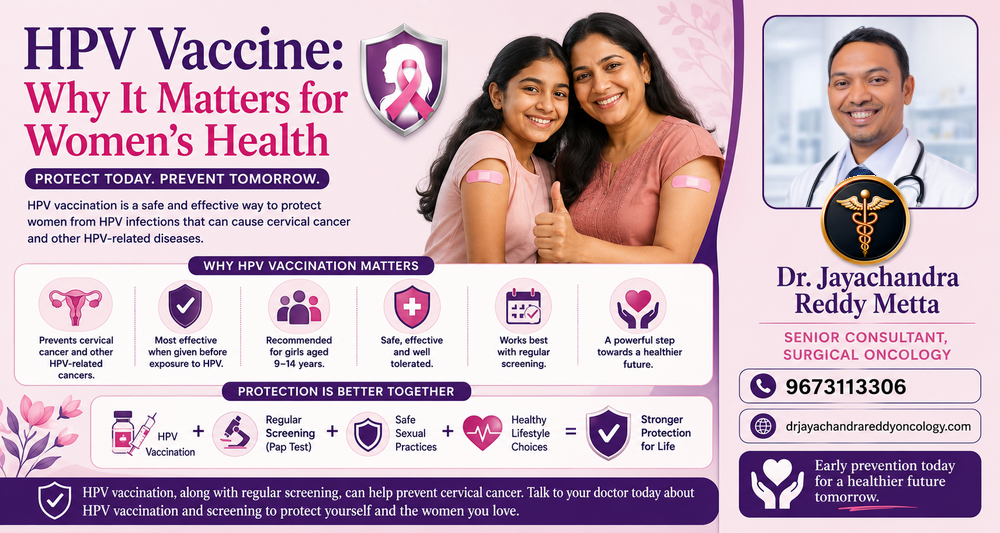
Graphics by Dr. Metta Jayachandra Reddy – Cancer Specialist in Vizag
HPV Vaccine: Why It Matters for Women’s Health
Human papillomavirus (HPV) is extremely common, and most HPV infections clear naturally. However, some high-risk HPV infections can persist and eventually cause cancers—most importantly cervical cancer, as well as cancers of the vagina, vulva, anus, penis, and throat. The good news is that HPV vaccination is one of the most effective tools available for preventing HPV-related cancers. Vaccination, combined with appropriate cervical cancer screening, can provide strong protection throughout a woman's life.
What Is HPV?
HPV, or human papillomavirus, is a group of more than 200 related viruses. Some types cause genital warts, while certain high-risk types can cause abnormal cell changes that may eventually develop into cancer.
HPV is primarily transmitted through intimate skin-to-skin sexual contact. A person can have HPV without knowing it because infection often causes no symptoms.
Why Is HPV Important for Women?
Persistent infection with high-risk HPV is responsible for more than 95% of cervical cancers. HPV is also associated with several other cancers affecting women, including vaginal and vulvar cancers.
This is why preventing HPV infection can play such an important role in women’s cancer prevention.
What Does the HPV Vaccine Do?
The HPV vaccine helps the immune system protect against infection with HPV types that can cause cancer and genital warts.
It is a preventive vaccine – meaning it helps prevent new HPV infections. It does not treat an existing HPV infection, genital warts, or an HPV-related cancer.
Who Should Get the HPV Vaccine?
The vaccine provides the greatest benefit when given before exposure to HPV, which is why vaccination during early adolescence is recommended.
WHO identifies girls aged 9–14 years as the primary target group for HPV vaccination. Depending on the country, vaccine availability, age, and individual circumstances, vaccination may also be appropriate for older adolescents and adults.
For adults, recommendations can differ by country and vaccine. For example, CDC recommends routine vaccination through age 26 for those not adequately vaccinated and shared clinical decision-making for some adults aged 27–45.
The right age and schedule for you should be discussed with your doctor.
How Many Doses Are Needed?
The number of doses depends on age, immune status, the vaccine used, and the applicable national recommendations.
WHO currently allows one- or two-dose schedules for many healthy individuals aged 9–20, while people who are immunocompromised generally require at least two doses and, where possible, three.
Because vaccination schedules can vary, it is best to follow the schedule recommended by your healthcare professional.
Is the HPV Vaccine Safe?
Yes. HPV vaccines have been extensively studied and are considered safe and well tolerated.
Common reactions include:
➜ Pain or tenderness at the injection site
➜ Mild headache
➜ Muscle aches
➜ Mild fever or tiredness
Serious adverse reactions are rare.
As with any vaccine, tell your healthcare provider about previous serious allergic reactions or other relevant medical conditions before vaccination.
Can I Get the Vaccine If I Am Already Sexually Active?
Possibly, depending on your age and circumstances.
The vaccine works best before exposure to HPV, but someone who is already sexually active may still benefit because they may not have been exposed to all of the HPV types covered by the vaccine.
However, the vaccine does not eliminate an HPV infection that is already present.
What If I Have Already Had HPV?
Having had HPV does not necessarily mean that vaccination has no value.
You may have been exposed to one HPV type but not others covered by the vaccine. Your doctor can help determine whether vaccination is appropriate for you.
Importantly, there is no need to assume that an HPV infection means you will develop cancer. Most HPV infections clear naturally; the concern is persistent infection with high-risk types.
Do Vaccinated Women Still Need Cervical Cancer Screening?
Yes. Absolutely.
HPV vaccines do not protect against every HPV type that can cause cervical cancer. Therefore, vaccinated women should continue to follow recommended cervical cancer screening guidelines.
Vaccination and screening work together:
➜ HPV vaccination → prevents many HPV infections
➜ Cervical screening → helps detect abnormal changes early
Both are important parts of cervical cancer prevention.
Can HPV Vaccination Prevent Cancer?
Yes. HPV vaccination has been shown to substantially reduce HPV infections and cervical precancer, and population studies have demonstrated a significant reduction in cervical cancer among vaccinated women.
This makes HPV vaccination much more than a routine childhood or adolescent vaccine—it is an important cancer-prevention tool.
Is HPV Vaccination Only for Girls?
No.
HPV can cause cancers and other diseases in both women and men, and vaccination can protect against HPV-related disease in both sexes. WHO considers girls 9–14 the primary target because of the major benefit in preventing cervical cancer, while vaccination of boys and other groups may be recommended depending on national policies and resources.
Can HPV Vaccination Replace Safe Sexual Practices?
No.
The vaccine does not protect against every sexually transmitted infection, nor does it protect against every HPV type. Preventive sexual health practices remain important.
Can HPV Vaccine Be Given During Pregnancy?
HPV vaccination is not recommended during pregnancy. If someone discovers they are pregnant after starting the vaccination series, the remaining dose(s) are generally postponed until after pregnancy; this is something to discuss with the treating doctor.
How Can Women Protect Themselves From Cervical Cancer?
A comprehensive approach includes:
➜ HPV vaccination
➜ Regular cervical cancer screening
➜ Avoiding tobacco
➜ Practicing healthy sexual behaviors
➜ Maintaining a healthy lifestyle
➜ Seeking medical advice for abnormal screening results or concerning symptoms
No vaccine provides 100% protection, so regular screening remains essential.
When Should You Talk to Your Doctor?
Consider discussing HPV vaccination with your doctor if:
➜ You or your daughter has not received the HPV vaccine.
➜ You are unsure whether the vaccination series is complete.
➜ You are an older adolescent or adult who missed vaccination.
➜ You have questions about HPV or cervical cancer prevention.
➜ You have concerns about your cervical cancer risk.
➜ You need advice about cervical cancer screening.
Your doctor can consider your age, vaccination history, health status, and local recommendations before advising you.
HPV vaccination offers women an important opportunity to prevent infections that can lead to cervical cancer and other HPV-related diseases. The earlier vaccination is given, the greater the potential benefit, but eligible older adolescents and adults may also benefit depending on individual circumstances. Vaccination should always be combined with appropriate cervical cancer screening.
Dr. Jayachandra Reddy Metta, Senior Consultant in Surgical Oncology, believes that cancer prevention begins with awareness and informed decisions. If you have questions about HPV vaccination, cervical cancer prevention, screening, or your individual cancer risk, consulting a specialist can help you understand the options available to you and take appropriate steps toward protecting your long-term health.
UPHOLDING INTEGRITY IN MEDICAL PRACTICE
Copyright 2026 | Dr. Jayachandra Reddy | All Rights Reserved | Designed by BrandUp Vizag

WOULD YOU LIKE TO BECOME ONE OF OUR DONORS?
