Cervical Cancer: Symptoms, Screening & Prevention
- Home
- Uncategorized
- Cervical Cancer: Symptoms, Screening & Prevention
Transforming Lives with Compassionate Cancer Care and Surgical Excellence!


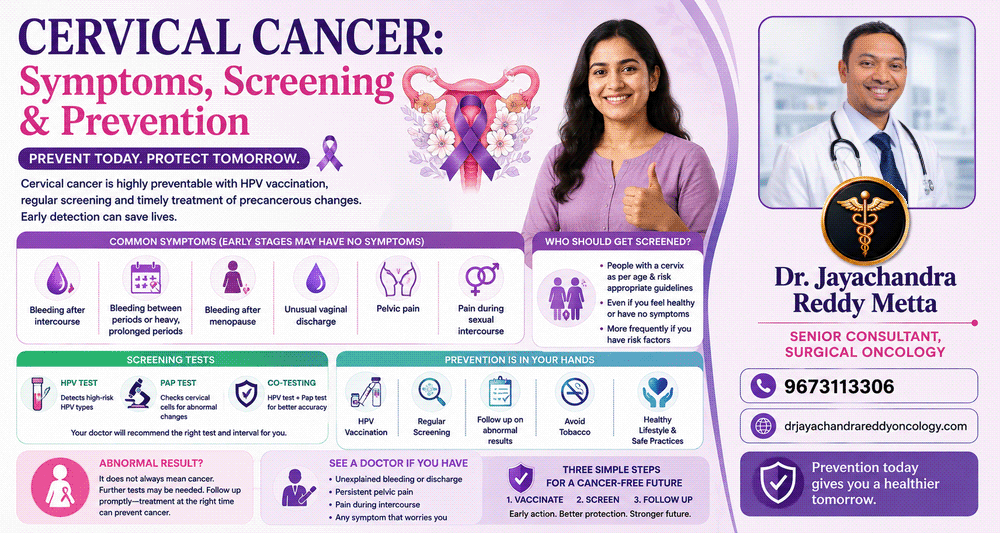
Infographic by Dr. Metta Jayachandra Reddy – Cancer Specialist in Vizag
Cervical Cancer: Symptoms, Screening & Prevention
Cervical cancer is one of the cancers that can often be prevented through HPV vaccination, regular screening, and timely treatment of precancerous changes. Almost all cervical cancers are linked to persistent infection with high-risk types of human papillomavirus (HPV). Understanding the warning signs and knowing when to get screened can make an important difference
What Is Cervical Cancer?
The cervix is the lower part of the uterus that connects to the vagina. Cervical cancer develops when abnormal cells in the cervix grow uncontrollably and eventually become cancerous.
In most cases, cervical cancer develops slowly. Persistent infection with high-risk HPV can cause abnormal cervical cell changes, which may progress from precancer to cancer over many years if they are not detected and treated.
The good news is that these precancerous changes can often be detected and treated before they become cancer.
What Causes Cervical Cancer?
The main cause is persistent infection with high-risk HPV.
HPV is extremely common and is usually transmitted through sexual contact. Most HPV infections are temporary and are cleared naturally by the immune system. The concern is when a high-risk HPV infection persists for a long time and causes changes in cervical cells.
Having HPV does not mean that you have cervical cancer.
What Are the Symptoms of Cervical Cancer?
Early cervical cancer often causes no symptoms, which is one reason regular screening is so important.
When symptoms do occur, they may include:
➜ Bleeding after sexual intercourse
➜ Bleeding between periods
➜ Periods that are unusually heavy or longer than normal
➜ Bleeding after menopause
➜ Unusual, watery, bloody, or foul-smelling vaginal discharge
➜ Pelvic pain
➜ Pain during sexual intercourse
These symptoms can have many causes other than cancer. However, unusual or persistent symptoms should be evaluated by a healthcare professional rather than ignored.
Why Is Screening So Important?
Cervical cancer screening is different from testing because of symptoms. Screening is performed when you have no symptoms, with the goal of finding precancerous changes before they develop into cancer.
Depending on your age, health history, and local guidelines, screening may involve:
HPV Test
This test looks for high-risk HPV types that can cause cervical cancer.
Pap Test
Also called a Pap smear or cervical cytology, this test examines cervical cells for abnormal changes.
HPV/Pap Co-testing
This combines HPV testing with examination of cervical cells.
Your doctor can recommend the most appropriate screening method and interval for you. Screening recommendations vary between countries and may also depend on your personal medical history.
Who Should Get Screened?
People with a cervix should follow age- and risk-appropriate cervical cancer screening recommendations.
WHO recommends regular cervical screening as an important part of cervical cancer prevention, with HPV-based screening increasingly being used as the preferred primary screening approach.
Your doctor may recommend a different schedule if you have:
➜ A history of abnormal cervical screening results
➜ Previous cervical precancer or cancer
➜ HIV or another condition affecting immunity
➜ Other specific medical risk factors
Do not assume that you are too young, too old, or too healthy to need screening without discussing it with your healthcare provider.
What About the HPV Vaccine?
HPV vaccination is one of the most effective ways to prevent HPV infection and HPV-related cancers.
WHO recommends HPV vaccination primarily for girls aged 9–14 years, ideally before exposure to HPV. Depending on age, immune status, vaccine, and national recommendations, one or more doses may be recommended.
The HPV vaccine:
* Helps prevent infection with important cancer-causing HPV types
* Helps reduce the risk of cervical cancer
* Is preventive—it does not treat an existing HPV infection
* Does not replace cervical cancer screening
If you or your child has not been vaccinated, speak with a healthcare professional about whether vaccination is appropriate.
Can Cervical Cancer Be Prevented?
Yes. A comprehensive prevention strategy includes:
➜ HPV vaccination
➜ Regular cervical cancer screening
➜ Following up promptly on abnormal screening results
➜ Avoiding tobacco
➜ Practicing safer sexual health behaviors
➜ Maintaining a healthy lifestyle
➜ Seeking medical attention for unusual vaginal bleeding or discharge
HPV vaccination and screening work together: vaccination helps prevent many HPV infections, while screening can identify precancerous changes that can be treated before cancer develops.
What Happens If a Screening Test Is Abnormal?
An abnormal screening result does not automatically mean you have cancer.
Depending on the result, your doctor may recommend:
➜ Repeat HPV or cervical testing
➜ A closer examination of the cervix
➜ Colposcopy
➜ A biopsy when necessary
➜ Treatment of precancerous changes
Following up on an abnormal result is extremely important because treating precancerous changes can prevent cervical cancer from developing.
When Should You See a Doctor?
Do not wait for your next routine screening appointment if you develop:
➜ Unexplained vaginal bleeding
➜ Bleeding after sexual intercourse
➜ Bleeding after menopause
➜ Persistent unusual vaginal discharge
➜ Pelvic pain
➜ Pain during sexual intercourse
These symptoms do not necessarily indicate cancer, but they should be evaluated to determine the cause.
A Simple Approach to Cervical Cancer Prevention
Think of prevention as three important steps:
1. VACCINATE
Protect against HPV.
2. SCREEN
Detect HPV or cervical cell changes early.
3. FOLLOW UP
Treat abnormal or precancerous changes promptly.
Together, these steps can prevent many cervical cancer cases and improve outcomes when disease is detected.
Cervical cancer is largely preventable, yet it continues to affect women around the world. The combination of HPV vaccination, regular screening, awareness of warning signs, and timely follow-up provides powerful protection.
Dr. Jayachandra Reddy Metta, Senior Consultant in Surgical Oncology, believes that prevention and early detection are essential parts of effective cancer care. If you have concerns about cervical cancer, HPV, abnormal screening results, or symptoms such as unusual bleeding or persistent pelvic discomfort, Dr. Reddy can provide expert evaluation, personalized guidance, and compassionate care to help you make informed decisions about your health.
UPHOLDING INTEGRITY IN MEDICAL PRACTICE
Copyright 2026 | Dr. Jayachandra Reddy | All Rights Reserved | Designed by BrandUp Vizag

WOULD YOU LIKE TO BECOME ONE OF OUR DONORS?
