Blood in Stool: When Should You Consult a Specialist?
- Home
- Uncategorized
- Blood in Stool: When Should You Consult a Specialist?
Transforming Lives with Compassionate Cancer Care and Surgical Excellence!


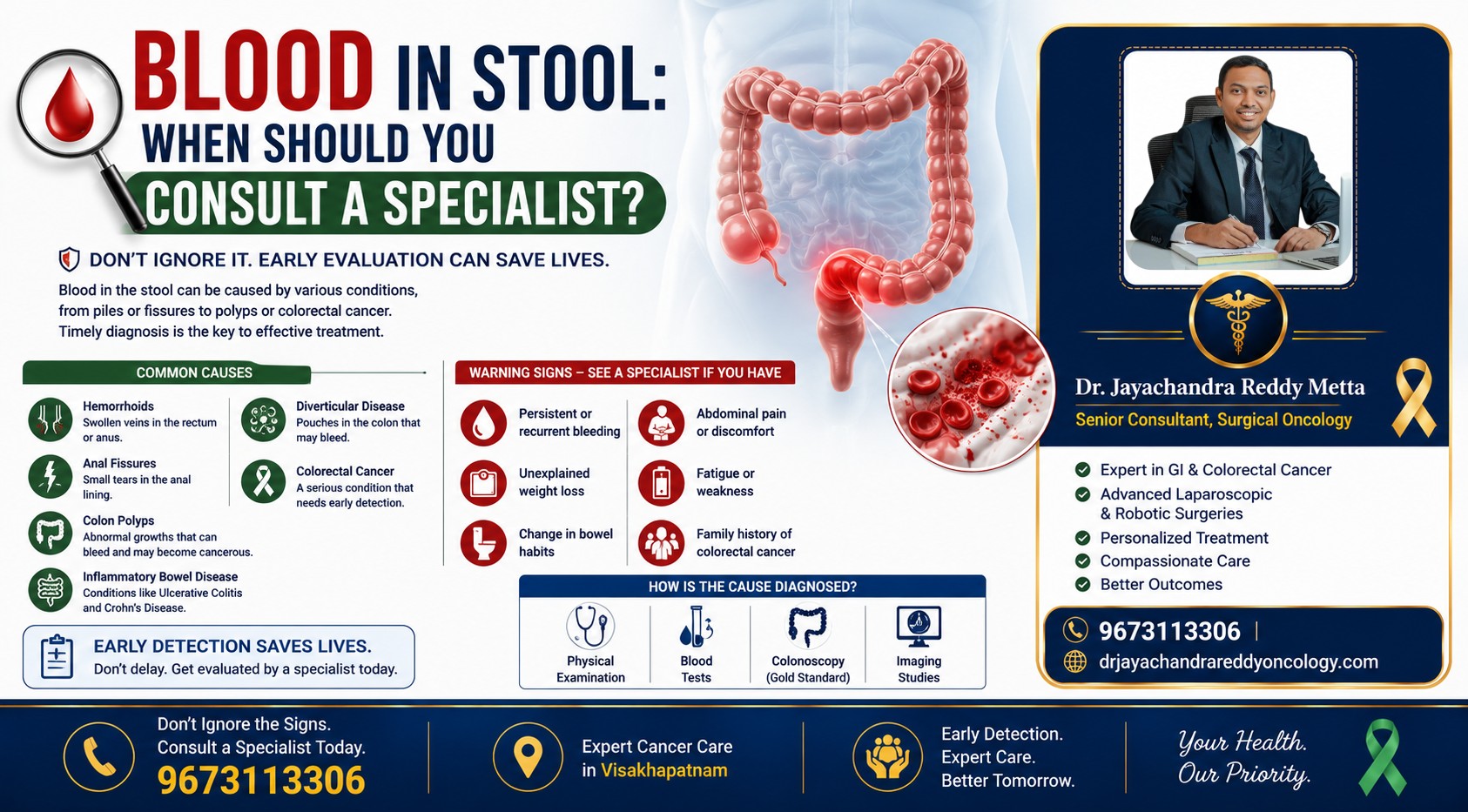
Visual representation by Dr. Metta Jayachandra Reddy – Cancer Specialist in Vizag
Blood in Stool: When Should You Consult a Specialist?
Finding blood in your stool can be alarming. While it does not always indicate a serious condition, it should never be ignored. Blood in the stool may be caused by a variety of digestive conditions, ranging from hemorrhoids to colorectal cancer. Recognizing when to seek medical attention is important for early diagnosis and appropriate treatment.
What Does Blood in Stool Mean?
Blood in the stool occurs when there is bleeding somewhere in the digestive tract. The appearance of the blood can vary depending on where the bleeding originates.
You may notice:
➜ Bright red blood on toilet paper
➜ Blood mixed with stool
➜ Dark red or maroon-colored stool
➜ Black, tarry stools
Any unexplained bleeding should be evaluated by a healthcare professional.
Common Causes of Blood in Stool
Not all cases of blood in stool are caused by cancer. Several conditions can lead to rectal bleeding.
Hemorrhoids
Hemorrhoids are swollen blood vessels in the rectum or anus and are one of the most common causes of bright red bleeding during bowel movements.
Anal Fissures
Small tears in the lining of the anus can cause pain and bleeding, especially during bowel movements.
Colon Polyps
Polyps are abnormal growths in the colon that may bleed. Some polyps can become cancerous over time if not removed.
Inflammatory Bowel Disease (IBD)
Conditions such as ulcerative colitis and Crohn’s disease can cause inflammation and bleeding within the digestive tract.
Diverticular Disease
Small pouches in the colon wall may occasionally bleed and cause visible blood in the stool.
Colorectal Cancer
One of the most important conditions associated with rectal bleeding is colorectal cancer. Early detection can significantly improve treatment outcomes.
Warning Signs That Require Specialist Evaluation
You should consult a specialist if blood in the stool is accompanied by:
Unexplained Weight Loss
Unexpected weight loss may indicate an underlying medical condition that requires investigation.
Persistent Change in Bowel Habits
Changes such as ongoing constipation, diarrhea, or narrowing of stools should not be ignored.
Abdominal Pain
Persistent abdominal discomfort, cramping, or bloating may require evaluation.
Fatigue or Weakness
Chronic bleeding can lead to anemia, resulting in tiredness, weakness, and shortness of breath.
Recurrent Bleeding
Even if bleeding appears minor, repeated episodes should be assessed by a healthcare professional.
Family History of Colorectal Cancer
Individuals with a family history of colorectal cancer may have a higher risk and should seek evaluation promptly.
When Should You See a Surgical Oncologist?
Consult a specialist as soon as possible if:
➜ Blood in stool persists for more than a few days
➜ Bleeding recurs frequently
➜ You are over 45 years of age
➜ You have a family history of colorectal cancer
➜ You experience unexplained weight loss
➜ You have persistent digestive symptoms
Early evaluation can help identify serious conditions before they progress.
How Is the Cause Diagnosed?
Your doctor may recommend several tests depending on your symptoms.
* Physical Examination
A thorough medical history and examination are often the first step.
* Blood Tests
Blood tests can help identify anemia or other underlying concerns.
* Colonoscopy
A colonoscopy allows direct examination of the colon and rectum using a flexible camera.
This is one of the most effective methods for diagnosing polyps, inflammation, and colorectal cancer.
* Imaging Studies
CT scans or other imaging tests may be recommended in certain cases.
Can Colorectal Cancer Be Prevented?
Many colorectal cancers begin as polyps that can be detected and removed before they become cancerous.
Preventive measures include:
➜ Regular screening colonoscopies
➜ Healthy diet rich in fruits and vegetables
➜ Maintaining a healthy weight
➜ Regular exercise
➜ Avoiding tobacco use
➜ Limiting alcohol consumption
Screening is especially important for individuals over 45 years of age or those with a family history of colorectal cancer.
Early Detection Saves Lives
Many people delay seeking medical attention because they assume bleeding is caused by hemorrhoids. While this may be true in some cases, persistent or unexplained bleeding should always be evaluated.
Early diagnosis of colorectal cancer often leads to more treatment options and better outcomes.
If you notice blood in your stool, do not ignore it. Prompt evaluation can provide answers and peace of mind.
Expert Colorectal Cancer Evaluation in Visakhapatnam
Dr. Jayachandra Reddy, experienced Surgical Oncologist in Visakhapatnam, provides expert evaluation of colorectal cancers, gastrointestinal cancers, cancer screening guidance, and advanced surgical oncology care.
If you are experiencing blood in the stool, changes in bowel habits, or other concerning digestive symptoms, timely consultation can help ensure accurate diagnosis and appropriate treatment.
Schedule your consultation today for expert cancer evaluation and personalized care.
UPHOLDING INTEGRITY IN MEDICAL PRACTICE
Copyright 2026 | Dr. Jayachandra Reddy | All Rights Reserved | Designed by BrandUp Vizag

WOULD YOU LIKE TO BECOME ONE OF OUR DONORS?
