Colon Cancer: Early Symptoms and Risk Factors
- Home
- Uncategorized
- Colon Cancer: Early Symptoms and Risk Factors
Transforming Lives with Compassionate Cancer Care and Surgical Excellence!


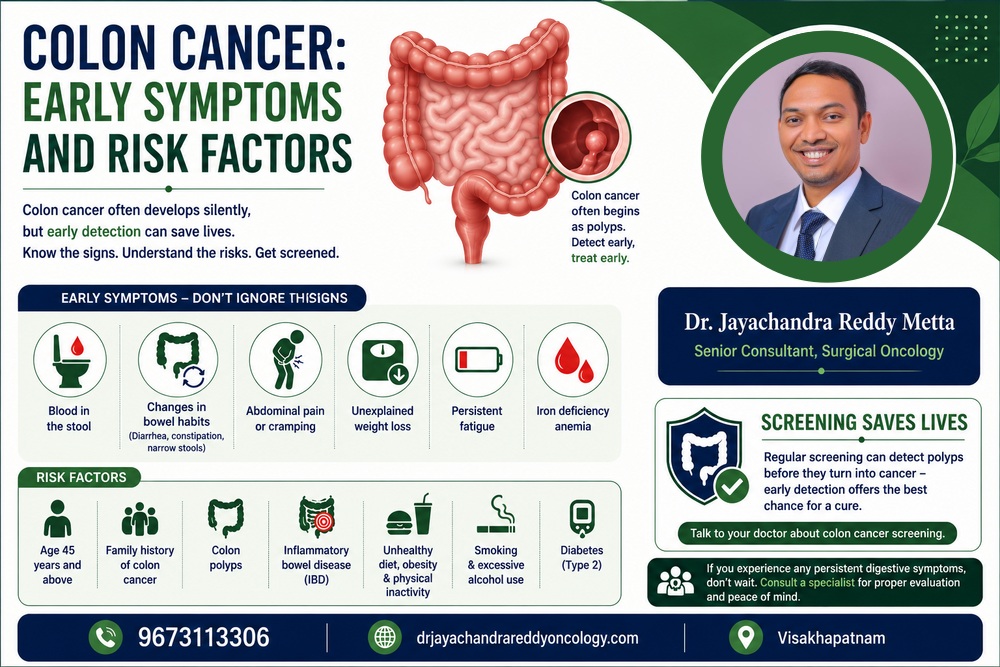
Infographic by Dr. Metta Jayachandra Reddy – Cancer Expert in Vizag
Colon Cancer: Early Symptoms and Risk Factors
Colon cancer, also known as colorectal cancer when it involves the rectum, is one of the most common cancers worldwide. It often begins as small growths called polyps inside the colon. While many polyps are harmless, some can gradually develop into cancer over time. The good news is that colon cancer is highly treatable when detected early. Knowing the warning signs and understanding your risk factors can help you seek medical attention before the disease progresses.
What Is Colon Cancer?
The colon is the largest part of the large intestine and plays an important role in absorbing water and storing waste before it leaves the body.
Colon cancer develops when abnormal cells grow uncontrollably in the lining of the colon. In many cases, the disease develops slowly over several years, making regular screening especially important.
Early Symptoms of Colon Cancer
In its early stages, colon cancer may not cause any symptoms. As it progresses, you may notice one or more of the following:
Blood in the Stool
Bright red or dark-colored blood in your stool should never be ignored. While hemorrhoids are a common cause, blood in the stool should always be evaluated by a doctor.
Changes in Bowel Habits
Persistent changes lasting more than a few weeks may include:
➜ Diarrhea
➜ Constipation
➜ Narrow or pencil-thin stools
➜ A feeling that the bowel does not empty completely
➜ Abdominal Pain or Cramping
Ongoing abdominal discomfort, bloating, cramps, or gas pains without an obvious cause should be investigated.
Unexplained Weight Loss
Losing weight without trying can sometimes be an early warning sign of cancer.
Persistent Fatigue
Feeling unusually tired or weak despite adequate rest may occur due to hidden blood loss and anemia.
Iron Deficiency Anemia
Some patients develop anemia because the tumor causes slow, unnoticed bleeding over time.
Risk Factors for Colon Cancer
Several factors increase the likelihood of developing colon cancer.
Age
The risk increases after the age of 45, although younger adults can also develop the disease.
Family History
Having a parent, sibling, or close relative with colon cancer increases your risk.
Colon Polyps
Previous polyps can increase the likelihood of developing colon cancer if left untreated.
Inflammatory Bowel Disease
Conditions such as:
➜ Ulcerative colitis
➜ Crohn’s disease
can increase long-term risk.
Lifestyle Factors
An unhealthy lifestyle may contribute to colon cancer risk, including:
➜ Diet high in processed or red meat
➜ Low-fiber diet
➜ Physical inactivity
➜ Obesity
➜ Smoking
➜ Excessive alcohol consumption
➜ Diabetes
People with Type 2 diabetes have a slightly increased risk of developing colorectal cancer.
Can Colon Cancer Be Prevented?
While not all cases can be prevented, you can reduce your risk by:
➜ Eating plenty of fruits, vegetables, and whole grains
➜ Limiting processed and red meat
➜ Exercising regularly
➜ Maintaining a healthy weight
➜ Avoiding tobacco
➜ Limiting alcohol intake
➜ Attending recommended screening tests
Healthy lifestyle choices benefit not only your digestive system but your overall health.
Screening Saves Lives
One of the unique aspects of colon cancer is that screening can detect and remove precancerous polyps before they become cancer.
Your doctor may recommend:
➜ Colonoscopy
➜ Stool-based screening tests
➜ CT colonography (virtual colonoscopy) in selected cases
People at average risk are generally advised to begin screening from age 45, while those with a family history or other risk factors may need earlier screening.
When Should You Consult a Specialist?
Seek medical advice if you experience:
➜ Blood in the stool
➜ Persistent constipation or diarrhea
➜ Changes in bowel habits lasting more than two weeks
➜ Persistent abdominal pain
➜ Unexplained weight loss
➜ Ongoing fatigue or anemia
Do not assume these symptoms are due to piles or indigestion without proper evaluation.
Treatment Options
Treatment depends on the stage of the disease and may include:
➜ Surgery
➜ Chemotherapy
➜ Radiation therapy (primarily for rectal cancer)
➜ Targeted therapy
➜ Immunotherapy in selected cases
When diagnosed early, surgery alone may be sufficient for many patients.
Colon cancer often develops silently, but paying attention to changes in your bowel habits and seeking medical evaluation early can make a significant difference. Regular screening, especially after the age of 45 or earlier for those at increased risk, offers the best opportunity to detect colon cancer at a highly treatable stage.
If you notice persistent digestive symptoms or have concerns about your risk, consult Dr. Jayachandra Reddy Metta, experienced surgical oncologist for a thorough evaluation.
UPHOLDING INTEGRITY IN MEDICAL PRACTICE
Copyright 2026 | Dr. Jayachandra Reddy | All Rights Reserved | Designed by BrandUp Vizag

WOULD YOU LIKE TO BECOME ONE OF OUR DONORS?
