Common Emotional Challenges Cancer Patients Face
- Home
- Uncategorized
- Common Emotional Challenges Cancer Patients Face
Transforming Lives with Compassionate Cancer Care and Surgical Excellence!


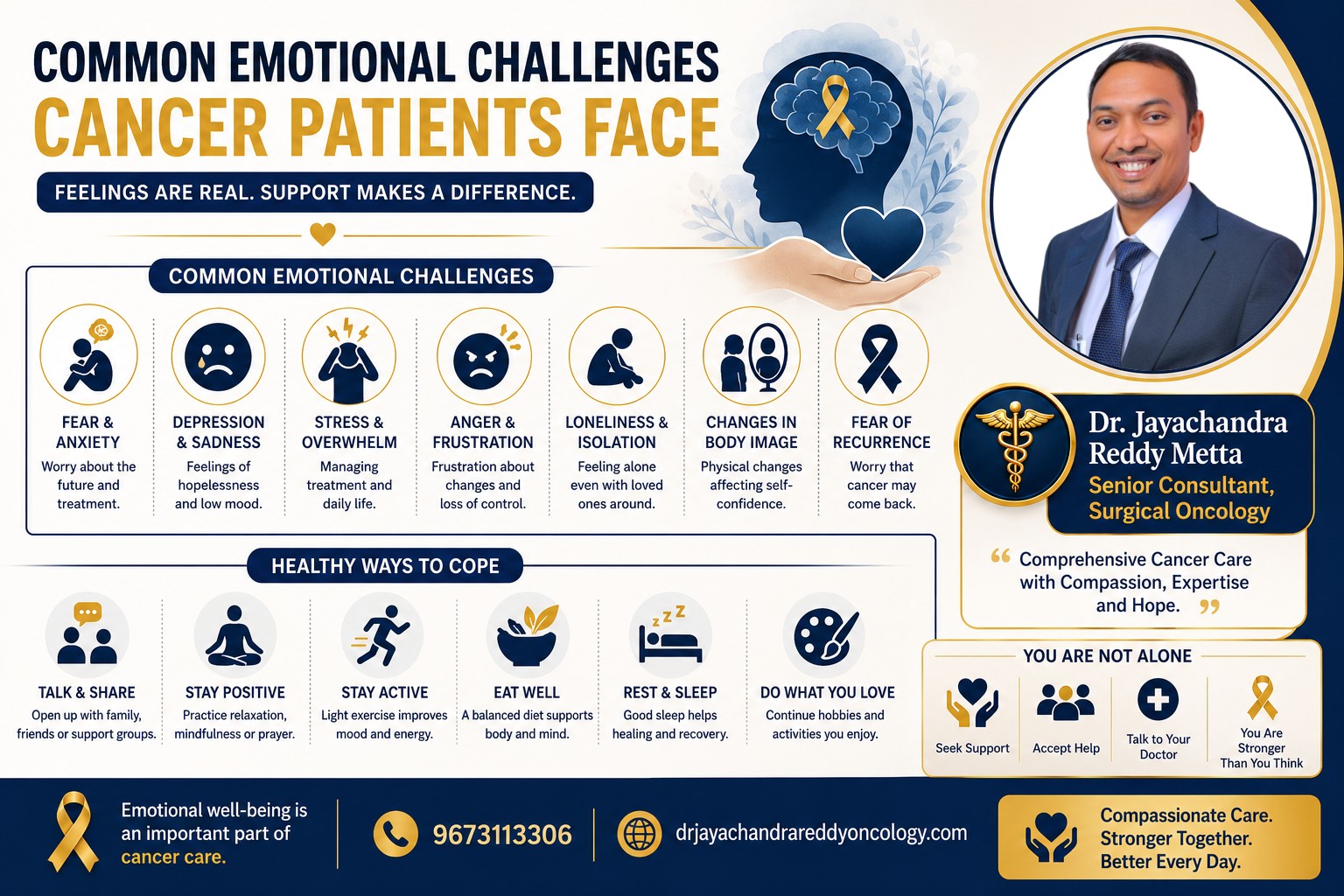
Infographic by Dr. Jayachandra Reddy Metta – Cancer Specialist in Vizag
Common Emotional Challenges Cancer Patients Face
A cancer diagnosis affects far more than physical health. It can bring a wide range of emotions that impact a person's mental well-being, relationships, and daily life. Feeling anxious, fearful, or overwhelmed is a normal response to such a life-changing event. Understanding these emotional challenges can help patients and their loved ones cope more effectively while encouraging timely support when needed.
Why Emotional Health Matters During Cancer Treatment
Emotional well-being plays an important role throughout cancer treatment. While it may not directly affect the cancer itself, managing emotional stress can improve quality of life, strengthen relationships, and help patients stay engaged with their treatment plan.
Recognizing emotional changes early allows patients to receive the support they need.
Common Emotional Challenges
Fear and Anxiety
One of the most common reactions after a cancer diagnosis is fear. Patients may worry about:
➜ The future
➜ Treatment outcomes
➜ Side effects
➜ Financial concerns
➜ Family responsibilities
Feeling anxious before scans, surgeries, or treatment sessions is also common.
Depression and Sadness
Many patients experience periods of sadness after diagnosis or during treatment. Some may lose interest in activities they once enjoyed or feel emotionally withdrawn.
If these feelings persist for several weeks, professional support may be beneficial.
Stress and Overwhelm
Managing appointments, medications, treatment schedules, work, and family responsibilities can become overwhelming.
Patients often feel emotionally and physically exhausted trying to balance everything.
Anger and Frustration
It is natural to feel frustrated about changes in health, lifestyle, or independence. Some patients may become irritable or angry as they adjust to their diagnosis.
These emotions are a normal part of coping.
Loneliness and Isolation
Even with supportive family and friends, some patients feel that others cannot fully understand what they are experiencing.
Treatment side effects may also reduce social interactions, increasing feelings of isolation.
Changes in Body Image
Hair loss, surgical scars, weight changes, or other physical changes can affect self-confidence and self-esteem.
These concerns are common and deserve compassion and understanding.
Fear of Cancer Returning
Even after successful treatment, many cancer survivors worry that the disease may come back.
This fear often becomes less intense over time but may return before follow-up appointments or scans.
Signs That Extra Support May Be Needed
Patients should seek additional help if they experience:
➜ Persistent sadness lasting more than two weeks
➜ Severe anxiety or panic attacks
➜ Difficulty sleeping for prolonged periods
➜ Loss of appetite unrelated to treatment
➜ Loss of interest in daily activities
➜ Feeling hopeless or helpless
➜ Difficulty concentrating
➜ Withdrawing from family and friends
Early emotional support can greatly improve overall well-being.
Healthy Ways to Cope
Many patients find these strategies helpful:
➜ Talk openly with family and trusted friends.
➜ Ask questions about your treatment to reduce uncertainty.
➜ Join a cancer support group.
➜ Practice relaxation techniques such as deep breathing or meditation.
➜ Stay physically active as advised by your doctor.
➜ Eat a balanced, nutritious diet.
➜ Maintain a regular sleep routine.
➜ Continue hobbies or activities that bring joy whenever possible.
Remember, asking for help is a sign of strength-not weakness.
How Family and Friends Can Help
Loved ones can provide valuable support by:
➜ Listening without judgment.
➜ Offering practical help with daily tasks.
➜ Attending medical appointments if requested.
➜ Encouraging healthy habits.
➜ Respecting the patient’s emotions without trying to “fix” everything.
➜ Simply being present during difficult moments.
Small acts of kindness often have a lasting impact.
When Should You Seek Professional Help?
Consult your healthcare team if emotional distress begins to interfere with daily life or treatment.
You should seek professional support if you experience:
➜ Persistent depression or anxiety
➜ Panic attacks
➜ Severe sleep disturbances
➜ Feelings of hopelessness
➜ Thoughts of self-harm or suicide
➜ Difficulty coping with treatment
If you or a loved one is facing emotional challenges during cancer treatment, remember that you don’t have to face them alone. Compassionate care extends beyond treating the disease-it includes supporting your emotional well-being every step of the way. Dr. Jayachandra Reddy Metta, Senior Consultant in Surgical Oncology, is committed to providing comprehensive cancer care with empathy, expertise, and personalized guidance to help patients and their families navigate every stage of the journey with confidence and hope.
UPHOLDING INTEGRITY IN MEDICAL PRACTICE
Copyright 2026 | Dr. Jayachandra Reddy | All Rights Reserved | Designed by BrandUp Vizag

WOULD YOU LIKE TO BECOME ONE OF OUR DONORS?
