Does Stress Increase Cancer Risk?
- Home
- Uncategorized
- Does Stress Increase Cancer Risk?
Transforming Lives with Compassionate Cancer Care and Surgical Excellence!


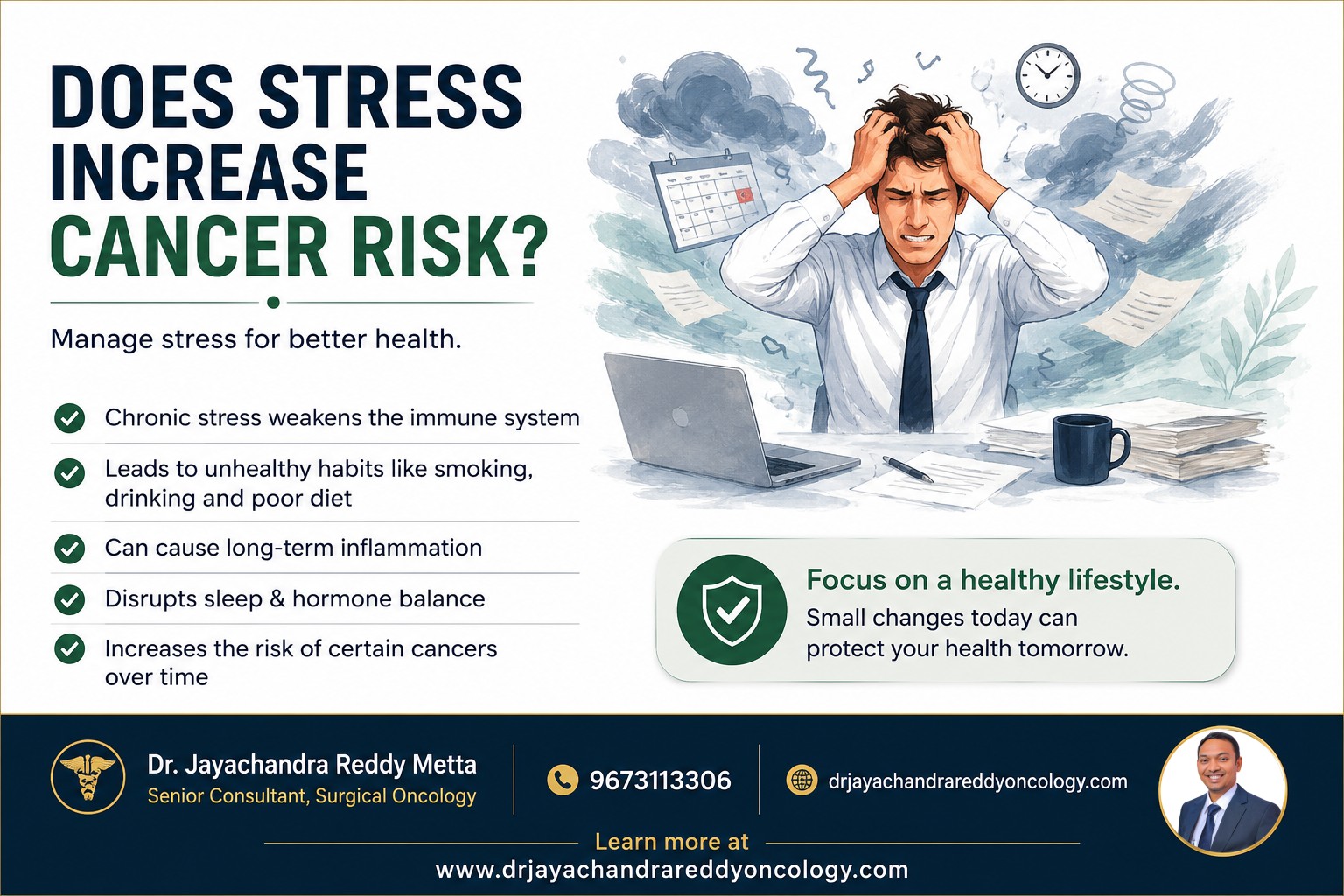
Infographic by Dr. Metta Jayachandra Reddy – Cancer Specialist in Vizag
Does Stress Increase Cancer Risk?
Stress has become a part of modern life. Whether it's work pressure, financial concerns, family responsibilities, or health issues, almost everyone experiences stress at some point. But many people wonder: Can stress actually cause cancer? The answer is not straightforward. Current scientific research does not show that stress directly causes cancer. However, chronic (long-term) stress can influence lifestyle habits and overall health in ways that may increase the risk of developing cancer and other illnesses. Understanding the relationship between stress and cancer can help you make healthier choices for both your physical and mental well-being.
Can Stress Directly Cause Cancer?
At present, there is no clear scientific evidence proving that stress alone causes cancer.
Cancer develops because of changes (mutations) in the DNA of cells. These changes can result from factors such as:
➜ Tobacco use
➜ Excessive alcohol consumption
➜ Obesity
➜ Poor diet
➜ Physical inactivity
➜ Certain infections
➜ Exposure to radiation or harmful chemicals
➜ Family history and inherited genetic mutations
Stress itself has not been proven to directly trigger these genetic changes.
How Can Stress Affect Cancer Risk?
Although stress may not directly cause cancer, it can influence behaviors that increase the risk.
Unhealthy Eating Habits
Many people eat more processed foods, sugary snacks, or unhealthy meals when stressed, which can contribute to obesity—a known risk factor for several cancers.
Smoking or Tobacco Use
Some individuals cope with stress by smoking or chewing tobacco, both of which significantly increase the risk of cancers of the lung, mouth, throat, esophagus, and several other organs.
Increased Alcohol Consumption
Chronic stress may lead to excessive alcohol intake, which is associated with cancers of the liver, breast, mouth, throat, and colon.
Lack of Physical Activity
Stress often reduces motivation to exercise. Regular physical activity helps maintain a healthy weight and lowers the risk of several cancers.
Poor Sleep
Long-term stress can interfere with sleep, leaving you feeling tired and affecting your overall health and well-being.
Does Stress Affect the Immune System?
Yes.
Prolonged stress can weaken the immune system and increase inflammation in the body. While this does not mean stress causes cancer, a healthy immune system plays an important role in protecting overall health and helping the body respond to illness.
Managing stress is therefore beneficial for your general health, even though it has not been proven to prevent cancer directly.
Can Stress Affect Cancer Patients?
For people diagnosed with cancer, stress is completely understandable. Worry about treatment, finances, work, and family can be overwhelming.
Managing stress during cancer treatment may help improve:
➜ Emotional well-being
➜ Sleep quality
➜ Appetite
➜ Energy levels
➜ Ability to cope with treatment
➜ Overall quality of life
Support from healthcare professionals, family, friends, and counsellors can make a meaningful difference.
Healthy Ways to Manage Stress
Simple daily habits can help reduce stress and improve overall health:
➜ Exercise regularly
➜ Eat a balanced, nutritious diet
➜ Get 7-8 hours of quality sleep
➜ Practice meditation or deep breathing
➜ Spend time with family and friends
➜ Enjoy hobbies and activities you love
➜ Limit alcohol and avoid tobacco
➜ Seek professional help if stress becomes overwhelming
Even small lifestyle changes can have a positive impact over time.
Can a Healthy Lifestyle Reduce Cancer Risk?
Yes.
While no method can completely prevent cancer, healthy habits can lower the risk of many cancers.
These include:
➜ Avoiding tobacco in all forms
➜ Limiting alcohol
➜ Eating plenty of fruits, vegetables, and whole grains
➜ Maintaining a healthy weight
➜ Staying physically active
➜ Protecting your skin from excessive sun exposure
➜ Receiving recommended vaccinations, such as HPV and Hepatitis B
➜ Attending regular cancer screening appointments
When Should You See a Doctor?
Consult your healthcare provider if:
➜ Stress is affecting your daily life for several weeks
➜ You experience persistent anxiety or depression
➜ You have unexplained weight loss or ongoing fatigue
➜ You notice any persistent symptoms that could indicate cancer, such as unexplained lumps, blood in the stool, chronic cough, or changes in bowel habits
Early medical evaluation is always the safest approach.
Stress is a normal part of life, and current research does not show that it directly causes cancer. However, chronic stress can contribute to unhealthy habits that increase the risk of many diseases, including some cancers.
The best approach is to focus on a healthy lifestyle, manage stress in positive ways, and attend regular health check-ups and cancer screenings. Looking after both your physical and emotional health is one of the most effective ways to support long-term well-being.
Dr. Jayachandra Reddy Metta provides expert cancer screening, diagnosis, surgical treatment, and compassionate care for patients and their families. If you have concerns about cancer symptoms or risk factors, schedule a consultation for timely evaluation and guidance.
UPHOLDING INTEGRITY IN MEDICAL PRACTICE
Copyright 2026 | Dr. Jayachandra Reddy | All Rights Reserved | Designed by BrandUp Vizag

WOULD YOU LIKE TO BECOME ONE OF OUR DONORS?
