Head & Neck Cancer: Symptoms You Should Not Ignore
- Home
- Uncategorized
- Head & Neck Cancer: Symptoms You Should Not Ignore
Transforming Lives with Compassionate Cancer Care and Surgical Excellence!


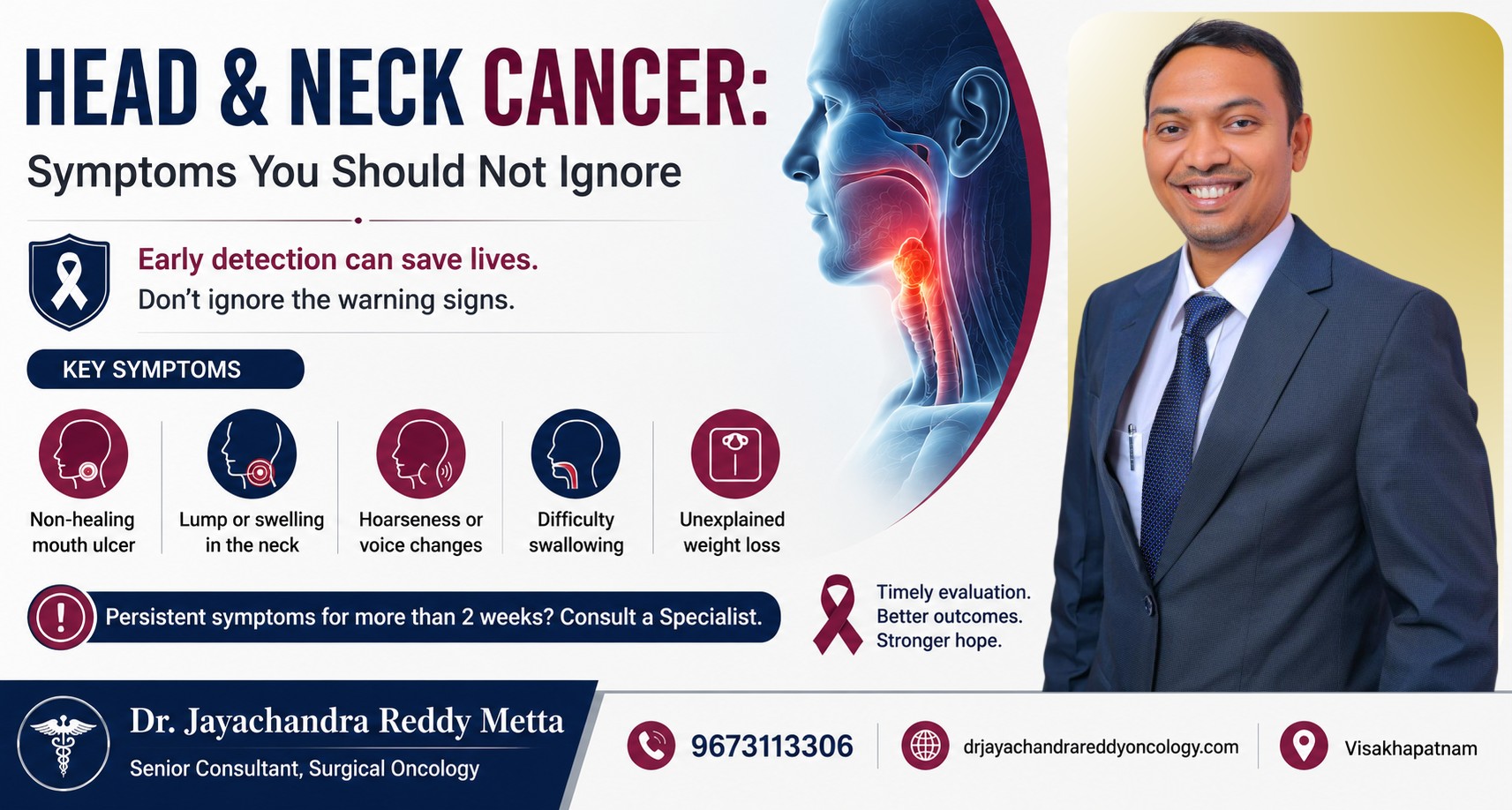
Infographic by Dr. Metta Jayachandra Reddy – Cancer Doctor in Vizag
Head & Neck Cancer: Symptoms You Should Not Ignore
Head and neck cancers are a group of cancers that develop in the mouth, throat, voice box (larynx), nose, sinuses, salivary glands, and other nearby structures. These cancers are particularly common among people who use tobacco products or consume alcohol regularly. The good news is that many head and neck cancers can be successfully treated when detected early. Knowing the warning signs can help you seek medical attention before the disease progresses.
What is Head & Neck Cancer?
Head and neck cancer refers to cancers that arise in the tissues and organs of the head and neck region, excluding cancers of the brain and eyes.
Common types include:
➜ Oral (mouth) cancer
➜ Tongue cancer
➜ Throat (pharyngeal) cancer
➜ Voice box (laryngeal) cancer
➜ Nasal and sinus cancers
➜ Salivary gland cancers
Common Symptoms You Should Not Ignore
Many early symptoms can appear harmless and may be mistaken for minor infections or common illnesses. However, symptoms that persist for more than two to three weeks should be evaluated by a specialist.
◆ A Non-Healing Mouth Ulcer
A sore or ulcer in the mouth that does not heal within a few weeks is one of the most common warning signs of oral cancer.
Seek medical evaluation if a mouth ulcer persists or repeatedly returns.
◆ Persistent Sore Throat
A sore throat that continues despite medication or treatment should not be ignored.
While infections are common, persistent symptoms may require further investigation.
◆ Difficulty Swallowing
Pain, discomfort, or a feeling that food is getting stuck while swallowing may be associated with cancers of the throat or esophagus.
◆ Hoarseness or Voice Changes
Changes in the voice lasting more than two weeks may indicate a problem involving the vocal cords or voice box.
Persistent hoarseness should always be evaluated.
◆ Lump in the Neck
A painless lump or swelling in the neck may be an enlarged lymph node and can sometimes be the first sign of head and neck cancer.
Any neck swelling that persists should be examined by a healthcare professional.
◆ Red or White Patches Inside the Mouth
Unusual red or white patches on the tongue, gums, cheeks, or roof of the mouth may be early warning signs that require evaluation.
◆ Persistent Ear Pain
Ear pain without an obvious ear infection can occasionally be associated with cancers affecting the throat or nearby structures.
◆ Unexplained Weight Loss
Losing weight without changes in diet or exercise can be a symptom of several cancers, including head and neck cancers.
◆ Bleeding from the Mouth or Nose
Unexplained bleeding that recurs or persists should never be ignored.
◆ Difficulty Moving the Tongue or Jaw
Pain or restricted movement while speaking, chewing, or swallowing may indicate a problem requiring specialist assessment.
Who Is at Higher Risk?
Certain factors increase the risk of developing head and neck cancer.
➜ Tobacco Use
Smoking cigarettes, cigars, bidis, or using chewing tobacco significantly increases risk.
➜ Alcohol Consumption
Heavy alcohol use further increases risk, especially when combined with tobacco use.
➜ Human Papillomavirus (HPV)
Certain HPV infections have been linked to cancers of the throat and tonsils.
➜ Poor Oral Hygiene
Long-term poor oral health may contribute to increased risk.
➜ Age and Family History
The risk generally increases with age, although younger individuals can also be affected.
When Should You See a Specialist?
Consult a specialist if you experience:
* A mouth ulcer lasting more than two weeks
* Persistent sore throat
* Difficulty swallowing
* Voice changes or hoarseness
* Neck swelling
* Unexplained weight loss
* Persistent ear pain
* Unusual mouth patches
Early evaluation can help determine the cause and provide timely treatment if necessary.
How Are Head & Neck Cancers Diagnosed?
Your doctor may recommend:
➜ Physical Examination
A detailed examination of the mouth, throat, and neck.
➜ Endoscopy
A small camera may be used to examine deeper structures of the throat and voice box.
➜ Biopsy
A tissue sample is collected and analyzed to confirm a diagnosis.
➜ Imaging Tests
CT scans, MRI scans, or PET scans may be used to determine the extent of disease.
Treatment Options
Treatment depends on the type, location, and stage of cancer.
Options may include:
➜ Surgery
➜ Radiation therapy
➜ Chemotherapy
➜ Targeted therapies
➜ Combination treatments
Many patients achieve excellent outcomes when cancer is diagnosed and treated early.
The Importance of Early Detection
Many head and neck cancers begin with symptoms that seem minor. Unfortunately, delays in seeking medical attention can allow the disease to progress.
If you notice persistent symptoms, especially if you use tobacco or alcohol, do not wait for symptoms to worsen. Early diagnosis can significantly improve treatment success.
Expert Head & Neck Cancer Care in Visakhapatnam
Dr. Jayachandra Reddy, experienced Surgical Oncologist in Visakhapatnam, provides expert evaluation, diagnosis, surgical oncology care, and personalized treatment planning for head and neck cancers.
If you are experiencing persistent mouth ulcers, throat symptoms, neck swelling, or other concerning signs, timely consultation can help ensure accurate diagnosis and appropriate care.
Schedule your consultation today for expert cancer evaluation and personalized oncology care.
UPHOLDING INTEGRITY IN MEDICAL PRACTICE
Copyright 2026 | Dr. Jayachandra Reddy | All Rights Reserved | Designed by BrandUp Vizag

WOULD YOU LIKE TO BECOME ONE OF OUR DONORS?
