How Early Diagnosis Improves Cancer Survival Rates
- Home
- Uncategorized
- How Early Diagnosis Improves Cancer Survival Rates
Transforming Lives with Compassionate Cancer Care and Surgical Excellence!


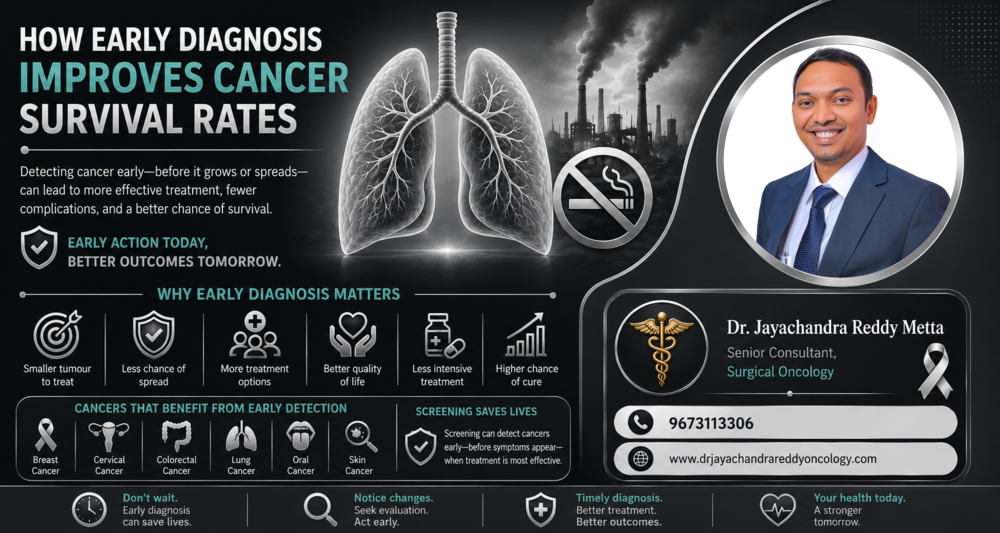
Infographic by Dr. Metta Jayachandra Reddy – Cancer Specialist in Vizag
How Early Diagnosis Improves Cancer Survival Rates
Cancer is not a single disease, and outcomes can vary greatly depending on the type of cancer and its biological behavior. However, one principle is true for many cancers: detecting cancer early can significantly improve the chances of successful treatment and survival. When cancer is diagnosed before it has grown extensively or spread to distant parts of the body, treatment is often more effective. Early diagnosis may also reduce treatment-related complications, preserve quality of life, and in some cases make treatment less complex.
What Does “Early Diagnosis” Mean?
Early diagnosis means identifying cancer at the earliest possible stage after symptoms or abnormal signs appear.
It involves three important steps:
➜ Recognizing possible warning signs
➜ Accessing appropriate medical evaluation and diagnostic tests
➜ Starting treatment without unnecessary delay
Early diagnosis is different from screening. Screening aims to identify certain cancers or precancerous changes in people who do not yet have symptoms. Both strategies can play an important role in improving cancer outcomes.
Why Does Cancer Stage Matter?
Cancer stage describes how far the disease has progressed. Although staging systems differ, cancer is generally more favorable to treat when it is still localized and has not spread to distant organs.
When cancer is diagnosed early, there may be:
➜ A smaller tumor to treat
➜ Less involvement of surrounding tissues
➜ Less likelihood of distant spread
➜ More treatment options
➜ A greater possibility of curative treatment
Stage is not the only factor that affects prognosis. The cancer’s biology, grade, genetic characteristics, a person’s overall health, and response to treatment also matter.
Early Diagnosis Can Improve Treatment Options
Finding cancer early may allow treatment to be more focused and effective.
Depending on the cancer type and stage, patients diagnosed earlier may be more likely to benefit from:
➜ Surgery aimed at complete removal of the cancer
➜ Less extensive surgery in some situations
➜ More targeted radiation treatment
➜ Fewer or less intensive treatment combinations in selected cases
➜ Treatment with curative intent
By contrast, cancer diagnosed after it has spread may require more complex treatment and may be more difficult to cure.
Earlier Detection Can Mean Better Survival
For many cancers, outcomes are strongly associated with the stage at diagnosis. Cancers detected at an earlier stage are often easier to treat and can have better survival outcomes than cancers diagnosed after they have spread.
However, it is important to understand that survival statistics are complex. Simply finding a cancer earlier does not always mean that screening has extended a person’s life, because measurements such as five-year survival can be affected by lead-time bias and overdiagnosis. Researchers therefore look at outcomes such as reductions in cancer deaths and reductions in late-stage disease when evaluating the benefit of screening programs.
For many cancers, timely diagnosis and appropriate treatment can improve outcomes and reduce cancer mortality.
Which Cancers Benefit From Early Detection?
Early diagnosis is important across many types of cancer. Some cancers with particularly effective early-detection or screening strategies include:
➜ Breast cancer
➜ Cervical cancer
➜ Colorectal cancer
➜ Lung cancer in selected high-risk groups
➜ Oral cancer, particularly when persistent changes are assessed promptly
➜ Skin cancer, including suspicious or changing lesions
For certain cancers, screening can even identify and allow treatment of precancerous changes, helping prevent cancer from developing in the first place. This is particularly important in cervical and colorectal cancer prevention.
What Symptoms Should Never Be Ignored?
Many symptoms are caused by conditions other than cancer. However, persistent or unexplained changes should be assessed rather than ignored.
Warning signs may include:
➜ A lump or unexplained swelling
➜ Persistent mouth ulcers
➜ Unusual or unexplained bleeding
➜ Blood in the urine or stool
➜ A cough that does not go away
➜ Persistent hoarseness
➜ Difficulty swallowing
➜ Unexplained weight loss
➜ Persistent changes in bowel or bladder habits
➜ A changing mole or skin lesion
➜ Persistent or unexplained pain
➜ Ongoing fatigue without an obvious cause
These symptoms do not necessarily mean cancer. However, seeking medical advice early can help identify the underlying cause and avoid unnecessary delays in diagnosis.
The Importance of Cancer Screening
Some cancers can be detected before symptoms develop through recommended screening tests.
Examples include:
➜ Cervical cancer screening using HPV testing and other appropriate methods
➜ Breast cancer screening with mammography in appropriate populations
➜ Colorectal cancer screening using recommended stool tests or endoscopic methods
➜ Lung cancer screening with low-dose CT for selected people at high risk
Screening is not recommended for every cancer or every person. The appropriate test depends on factors such as age, risk factors, family history, and national or local guidelines.
Why Do Delays in Diagnosis Matter?
Delays can occur at several stages:
➜ Waiting too long to seek medical advice
➜ Delayed referral for specialist evaluation
➜ Difficulty accessing diagnostic tests
➜ Delays in receiving a confirmed diagnosis
➜ Delays in starting appropriate treatment
Reducing these delays is an important part of cancer care.
How Can You Improve Your Chances of Early Detection?
You cannot prevent every cancer, but you can take important steps to avoid delays:
➜ Pay attention to persistent changes in your body.
➜ Do not ignore symptoms that continue or worsen.
➜ Attend recommended health check-ups.
➜ Follow appropriate cancer screening recommendations.
➜ Know your family history and discuss it with your doctor.
➜ Avoid tobacco and maintain a healthy lifestyle.
➜ Follow up promptly on abnormal test results.
➜ Seek specialist advice when recommended.
Early Diagnosis Is Not About Fear – It Is About Action
Cancer awareness should not create unnecessary fear. Most symptoms are not caused by cancer.
The purpose of awareness is to encourage people to recognize persistent changes and seek medical advice at the right time. Early evaluation can provide reassurance when symptoms are caused by a benign condition—and can lead to earlier treatment when something more serious is found.
Don’t wait for symptoms to become severe before seeking medical advice.
Early diagnosis is one of the most important tools in the fight against cancer. While early detection cannot guarantee a cure, identifying many cancers before they become advanced can improve treatment options, increase the chances of successful outcomes, and reduce the burden of treatment.
Dr. Jayachandra Reddy Metta, Senior Consultant in Surgical Oncology, emphasizes the importance of cancer awareness, timely evaluation, and appropriate treatment planning. If you notice persistent or unusual symptoms, have an abnormal screening result, or are concerned about your personal cancer risk, Dr. Reddy can provide expert evaluation and compassionate guidance to help determine the most appropriate next steps. Early action can make a meaningful difference.
UPHOLDING INTEGRITY IN MEDICAL PRACTICE
Copyright 2026 | Dr. Jayachandra Reddy | All Rights Reserved | Designed by BrandUp Vizag

WOULD YOU LIKE TO BECOME ONE OF OUR DONORS?
