Lung Cancer in Non-Smokers: Is It Possible?
- Home
- Uncategorized
- Lung Cancer in Non-Smokers: Is It Possible?
Transforming Lives with Compassionate Cancer Care and Surgical Excellence!


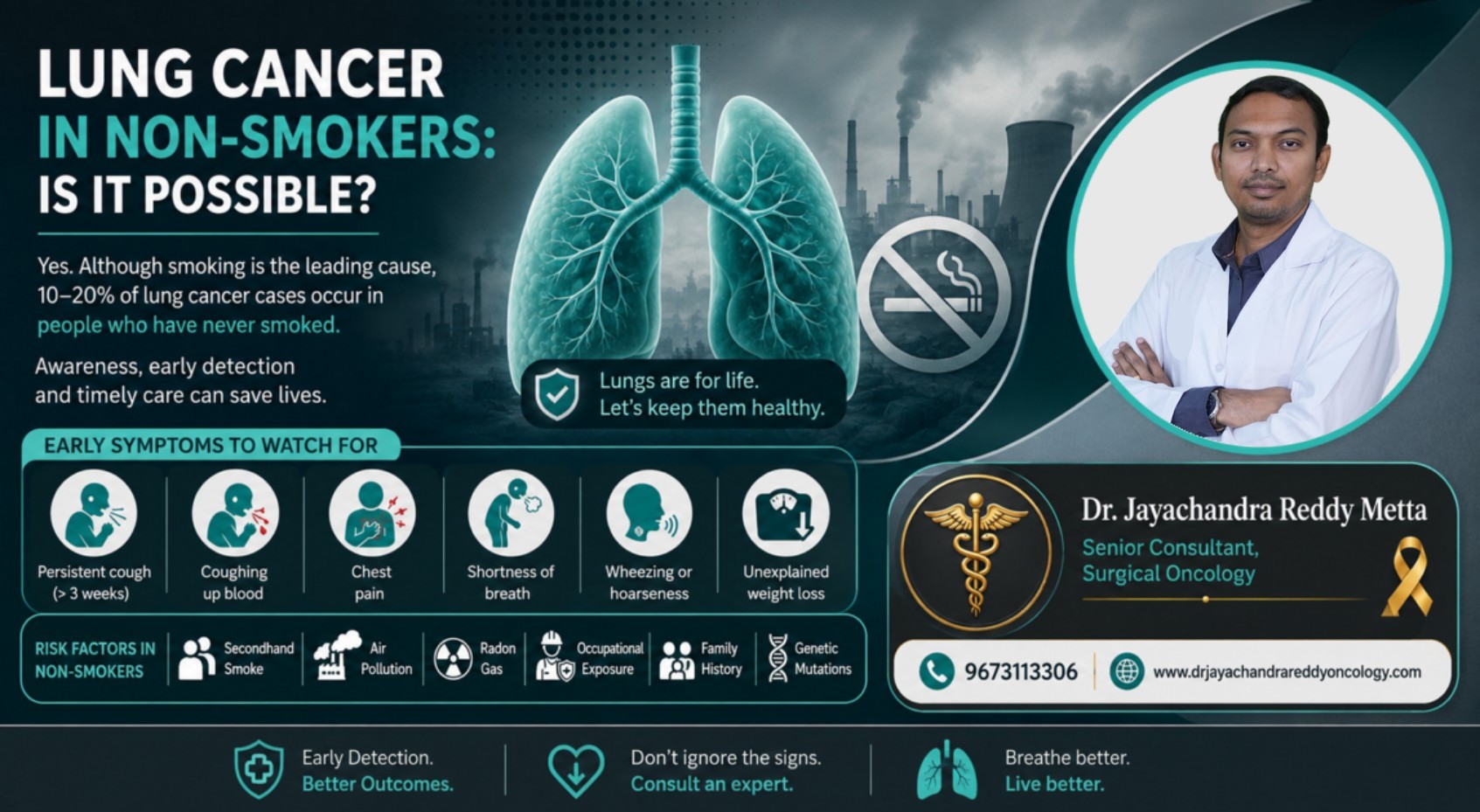
Infographic by Dr. Jayachandra Reddy Metta – Cancer Specialist in Vizag
Lung Cancer in Non-Smokers: Is It Possible?
When most people think of lung cancer, they immediately associate it with smoking. While tobacco use remains the leading cause of lung cancer, the disease can also develop in people who have never smoked. In fact, a significant number of lung cancer cases occur in non-smokers every year. Understanding the risk factors, symptoms, and importance of early diagnosis can help save lives.
Can Non-Smokers Get Lung Cancer?
Yes.
Although smoking greatly increases the risk, lung cancer can affect anyone, including people who have never smoked a cigarette. Studies estimate that approximately 10–20% of lung cancer cases occur in non-smokers.
Because many non-smokers do not consider themselves at risk, diagnosis is sometimes delayed.
What Causes Lung Cancer in Non-Smokers?
Several factors can contribute to lung cancer in people who do not smoke.
Secondhand Smoke
Regular exposure to tobacco smoke from family members, coworkers, or public places increases the risk of lung cancer.
Air Pollution
Long-term exposure to polluted air, vehicle emissions, and industrial pollutants may damage lung tissue over time.
Radon Gas
Radon is a naturally occurring radioactive gas that can accumulate inside homes and buildings. Prolonged exposure increases the risk of lung cancer.
Occupational Exposure
Certain occupations involve exposure to harmful substances such as:
➜ Asbestos
➜ Silica dust
➜ Diesel exhaust
➜ Arsenic
➜ Chromium
➜ Nickel
Proper workplace safety measures are essential to reduce these risks.
Family History
People with a close relative diagnosed with lung cancer may have a higher risk due to inherited genetic factors.
Genetic Mutations
Some lung cancers develop because of genetic changes in lung cells, even in people who have never smoked.
Early Symptoms of Lung Cancer
Early lung cancer may not cause noticeable symptoms. As the disease progresses, warning signs may include:
➜ A persistent cough lasting more than three weeks
➜ Coughing up blood
➜ Chest pain
➜ Shortness of breath
➜ Wheezing
➜ Hoarseness of voice
➜ Recurrent chest infections
➜ Unexplained weight loss
➜ Persistent fatigue
Any of these symptoms should be evaluated by a healthcare professional, especially if they persist.
Who Should Be More Careful?
Even if you have never smoked, you should be particularly aware if you:
➜ Are over 50 years of age
➜ Have prolonged exposure to secondhand smoke
➜ Work in industries with chemical exposure
➜ Have a family history of lung cancer
➜ Live in areas with significant air pollution
Awareness of your personal risk factors can help with early detection.
How Is Lung Cancer Diagnosed?
If lung cancer is suspected, your doctor may recommend:
➜ Chest X-ray
➜ CT scan
➜ PET-CT scan
➜ Bronchoscopy
➜ Needle biopsy
➜ Molecular or genetic testing
These investigations help determine the type and stage of cancer, allowing doctors to plan the most effective treatment.
Treatment Options
Treatment depends on the stage of the disease, the type of lung cancer, and the patient’s overall health.
Common treatment options include:
➜ Surgery
➜ Chemotherapy
➜ Radiation therapy
➜ Targeted therapy
➜ Immunotherapy
➜ Combination treatments
Many patients benefit from a personalized treatment plan developed by a multidisciplinary cancer care team.
Can Lung Cancer Be Prevented?
While not all cases can be prevented, you can reduce your risk by:
➜ Avoiding tobacco and secondhand smoke
➜ Protecting yourself from workplace hazards
➜ Maintaining good indoor ventilation
➜ Following a healthy lifestyle
➜ Exercising regularly
➜ Eating a balanced diet rich in fruits and vegetables
Seeking medical evaluation for persistent respiratory symptoms
When Should You Consult a Specialist?
Do not ignore symptoms such as:
➜ A cough that doesn’t go away
➜ Blood in sputum
➜ Persistent chest pain
➜ Difficulty breathing
➜ Unexplained weight loss
➜ Repeated lung infections
Early evaluation allows timely diagnosis and improves treatment outcomes.
Lung cancer is not limited to smokers. Non-smokers can also develop the disease due to environmental exposures, genetic factors, or other risks. Recognizing symptoms early and seeking expert medical advice can make a significant difference.
If you or a loved one has persistent respiratory symptoms or concerns about lung health, consult an experienced surgical oncologist like Dr. Jayachandra Reddy Metta for a thorough evaluation. Early diagnosis offers the best opportunity for successful treatment.
UPHOLDING INTEGRITY IN MEDICAL PRACTICE
Copyright 2026 | Dr. Jayachandra Reddy | All Rights Reserved | Designed by BrandUp Vizag

WOULD YOU LIKE TO BECOME ONE OF OUR DONORS?
