


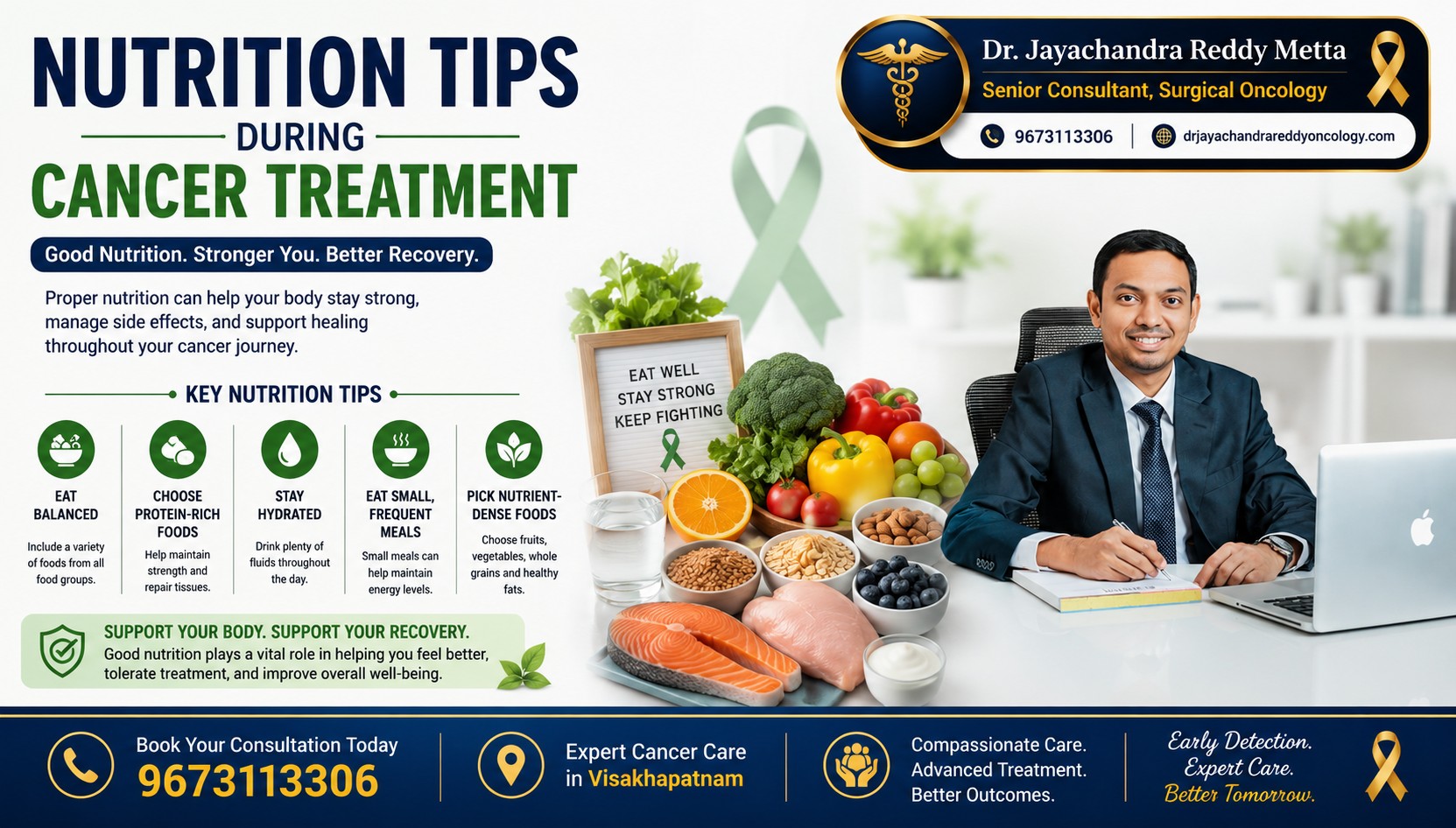
Why Nutrition Matters During Cancer Treatment
Cancer and its treatments can affect appetite, digestion, taste, and energy levels. Some patients may experience weight loss, fatigue, nausea, or difficulty eating.
Good nutrition helps:
➜ Maintain body weight and muscle strength
➜ Support the immune system
➜ Improve energy levels
➜ Promote healing and recovery
➜ Help the body tolerate treatment better
➜ Reduce the risk of infections and complications
A balanced diet provides the nutrients needed to keep the body functioning as effectively as possible throughout treatment.
Focus on Protein-Rich Foods
Protein is essential for repairing tissues, maintaining muscle mass, and supporting recovery.
Good sources of protein include: Eggs Fish Chicken Lean meats Milk and yogurt Paneer and cheese Lentils and beans Nuts and seeds
Including protein with every meal can help patients maintain strength during treatment.
Stay Well Hydrated
Proper hydration is important for overall health and can help reduce fatigue and support recovery.
Try to drink: Water Coconut water Soups and broths Fresh fruit juices (when appropriate) Oral rehydration fluids if recommended by your doctor
Patients experiencing vomiting or diarrhea may require extra fluids to prevent dehydration.
Eat Small, Frequent Meals
Large meals can sometimes feel overwhelming during treatment.
Instead, consider: Eating smaller meals every 2–3 hours Keeping healthy snacks available Avoiding long gaps between meals
Frequent eating can help maintain energy levels and reduce nausea.
Choose Nutrient-Dense Foods
When appetite is reduced, every bite should provide as much nutrition as possible.
Include: Fresh fruits Colorful vegetables Whole grains Nuts and seeds Healthy fats such as olive oil and avocado
These foods provide vitamins, minerals, antioxidants, and energy that support overall health.
Managing Common Treatment Side Effects
Nausea and Vomiting
Patients experiencing nausea may find it helpful to:
➜ Eat dry foods such as toast or crackers
➜ Avoid greasy or spicy foods
➜ Eat smaller meals more frequently
➜ Sip fluids slowly throughout the day
Loss of Appetite
To improve calorie and nutrient intake:
➜ Eat favorite healthy foods
➜ Add protein-rich snacks between meals
➜ Consider smoothies or nutritional drinks if recommended
Mouth Sores
If mouth sores develop:
➜ Choose soft foods
➜ Avoid spicy or acidic foods
➜ Drink plenty of fluids
➜ Use a straw for beverages if needed
Taste Changes
Cancer treatment can temporarily alter taste. Helpful strategies include:
➜ Trying different seasonings and flavors
➜ Using fresh herbs
➜ Eating foods at cooler temperatures
➜ Maintaining good oral hygiene
Foods to Limit During Treatment
Some foods may be harder to tolerate or may increase the risk of infection.
Patients should limit:
✖ Raw or undercooked meat and seafood
✖ Unpasteurized dairy products
✖ Excessively processed foods
✖ Excess alcohol consumption
✖ Foods that worsen nausea or digestive discomfort
Always follow your healthcare team’s dietary recommendations.
Don’t Ignore Weight Changes
Unexpected weight loss or difficulty eating should be discussed with your doctor.
Early nutritional support can help prevent complications and improve treatment tolerance.
The Importance of Personalized Nutrition
Every patient’s cancer journey is unique. Nutritional needs may vary depending on:
➜ Type of cancer
➜ Stage of disease
➜ Treatment plan
➜ Age and overall health
➜ Existing medical conditions
A personalized approach often provides the best results.
Supporting Recovery Through Healthy Nutrition
While nutrition alone cannot treat cancer, it plays an important role in helping patients stay strong during treatment and recovery.
Healthy eating, adequate hydration, regular follow-up care, and support from healthcare professionals can make a meaningful difference throughout the cancer journey.
Expert Cancer Care in Visakhapatnam
Dr. Jayachandra Reddy, experienced Cancer Doctor in Visakhapatnam, provides expert cancer evaluation, surgical oncology care, treatment guidance, and compassionate support for patients and families throughout their cancer journey.
If you have questions about cancer treatment, surgery, recovery, or nutrition during treatment, Dr. Reddy’s expert guidance can help you make informed decisions and improve overall well-being.
Schedule your consultation today for expert cancer care and personalized treatment guidance.

