Persistent Acidity: Could It Be Something Serious?
- Home
- Uncategorized
- Persistent Acidity: Could It Be Something Serious?
Transforming Lives with Compassionate Cancer Care and Surgical Excellence!


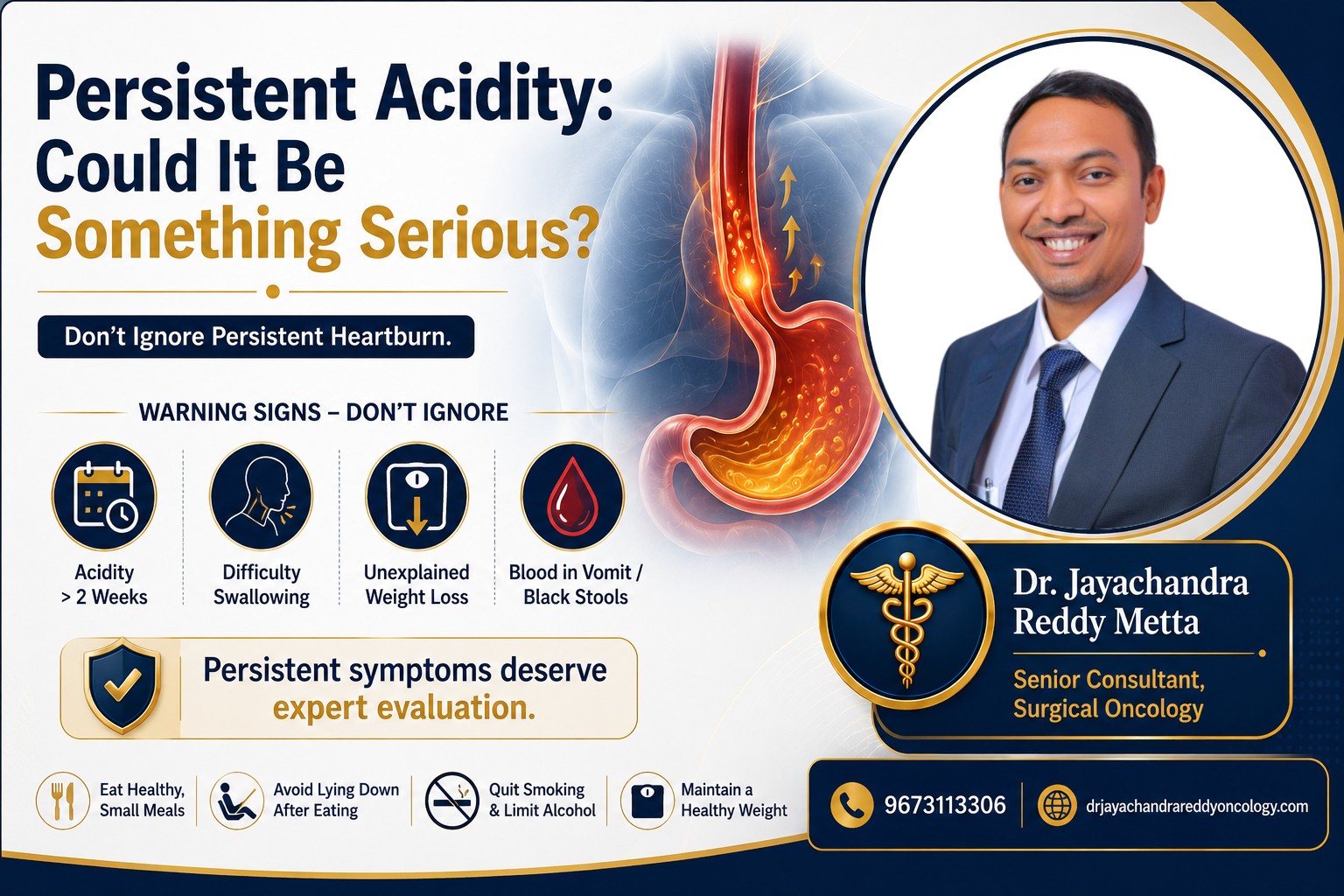
Infographic by Dr. Metta Jayachandra Reddy – Cancer Specialist in Vizag
Persistent Acidity: Could It Be Something Serious?
Most people experience acidity or heartburn from time to time, especially after eating spicy or heavy meals. In many cases, these symptoms are temporary and improve with lifestyle changes or over-the-counter medications. However, when acidity becomes frequent, persistent, or is accompanied by other warning signs, it may indicate a more serious underlying condition—including, in some cases, cancer of the food pipe (esophagus) or stomach. Understanding when to seek medical attention can help with early diagnosis and effective treatment.
What Is Acidity?
Acidity, also known as acid reflux or heartburn, occurs when stomach acid flows back into the esophagus (food pipe). This can cause:
➜ A burning sensation in the chest
➜ Sour or bitter taste in the mouth
➜ Burping or bloating
➜ Discomfort after meals
➜ Symptoms that worsen when lying down
Occasional acidity is common and usually not a cause for concern.
Common Causes of Acidity
Several everyday factors can trigger acidity, including:
➜ Eating spicy, oily, or fatty foods
➜ Large or late-night meals
➜ Excessive tea, coffee, or carbonated drinks
➜ Smoking
➜ Alcohol consumption
➜ Obesity
➜ Stress
➜ Certain medications
Addressing these triggers often helps relieve symptoms.
When Should You Be Concerned?
Persistent acidity should never be ignored if it is associated with any of the following:
Symptoms Last More Than Two Weeks
Heartburn or acidity that continues despite medication or lifestyle changes requires medical evaluation.
Difficulty Swallowing
If food feels like it is getting stuck while swallowing, it should be assessed promptly.
Unexplained Weight Loss
Losing weight without trying may indicate an underlying medical condition.
Persistent Vomiting
Frequent vomiting or nausea that continues over several days should not be ignored.
Blood in Vomit or Black Stools
Vomiting blood or passing black, tarry stools may indicate bleeding in the digestive tract and requires immediate medical attention.
Persistent Chest Pain
Although heartburn can cause chest discomfort, persistent or severe chest pain should always be evaluated urgently to rule out heart or gastrointestinal conditions.
Loss of Appetite
A noticeable decrease in appetite lasting several weeks should be investigated.
Could Persistent Acidity Be a Sign of Cancer?
Most cases of acidity are not caused by cancer. However, long-standing acid reflux can sometimes damage the lining of the esophagus, increasing the risk of conditions such as Barrett’s esophagus, which can occasionally progress to esophageal cancer.
Persistent acidity may also be associated with stomach or esophageal cancers, particularly when accompanied by warning signs such as difficulty swallowing, weight loss, or bleeding.
Early evaluation is essential for accurate diagnosis.
Who Is at Higher Risk?
The risk of serious digestive diseases is higher in people who:
➜ Smoke or use tobacco products
➜ Consume excessive alcohol
➜ Are overweight or obese
➜ Have chronic acid reflux (GERD)
➜ Have Barrett’s esophagus
➜ Eat a diet low in fruits and vegetables
➜ Have a family history of stomach or esophageal cancer
➜ Are over 50 years of age
How Is the Cause Diagnosed?
Depending on your symptoms, your doctor may recommend:
➜ A detailed medical examination
➜ Upper gastrointestinal endoscopy
➜ Biopsy if abnormal tissue is detected
➜ Blood tests
➜ CT scan or other imaging studies if required
An endoscopy allows the doctor to directly examine the esophagus and stomach and is often the best investigation for persistent symptoms.
Can Persistent Acidity Be Prevented?
Many cases can be reduced by adopting healthy habits:
➜ Eat smaller, more frequent meals
➜ Avoid lying down immediately after eating
➜ Maintain a healthy body weight
➜ Stop smoking
➜ Limit alcohol consumption
➜ Reduce spicy and fatty foods
➜ Manage stress effectively
Seek medical advice if symptoms persist
When Should You Consult a Specialist?
Consult a specialist promptly if you have:
➜ Acidity lasting longer than two weeks
➜ Difficulty swallowing
➜ Persistent vomiting
➜ Blood in vomit or black stools
➜ Unexplained weight loss
➜ Persistent chest discomfort related to eating
➜ Loss of appetite
➜ Symptoms that continue despite medication
Early diagnosis can help identify serious conditions before they become advanced.
While occasional acidity is common and usually harmless, persistent or worsening symptoms should never be ignored. Most cases are not caused by cancer, but timely evaluation is important to identify the underlying cause and begin appropriate treatment. Paying attention to warning signs can lead to earlier diagnosis and better outcomes.
If you are experiencing persistent acidity or other concerning digestive symptoms, don’t ignore them. Dr. Jayachandra Reddy Metta, Senior Consultant in Surgical Oncology, provides expert evaluation and compassionate care for patients with cancers of the digestive system. Early diagnosis can make a significant difference-consult a specialist promptly if your symptoms persist.
UPHOLDING INTEGRITY IN MEDICAL PRACTICE
Copyright 2026 | Dr. Jayachandra Reddy | All Rights Reserved | Designed by BrandUp Vizag

WOULD YOU LIKE TO BECOME ONE OF OUR DONORS?
