Recovery After Cancer Surgery: What to Expect
- Home
- Uncategorized
- Recovery After Cancer Surgery: What to Expect
Transforming Lives with Compassionate Cancer Care and Surgical Excellence!


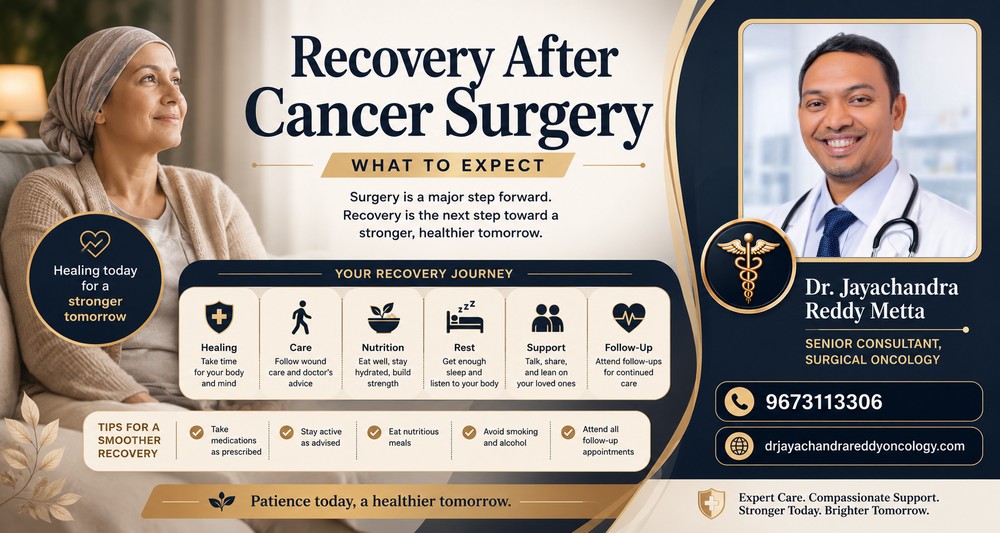
Infographic by Dr. Jayachandra Reddy Metta – Cancer Specialist in Vizag
Recovery After Cancer Surgery: What to Expect
Undergoing cancer surgery is a major milestone in your treatment journey. While the operation is an important step toward recovery, healing continues long after you leave the operating room. Every patient's recovery is unique and depends on the type of surgery, overall health, and whether additional treatments such as chemotherapy or radiation therapy are needed. Knowing what to expect can help you recover more confidently and recognize when to seek medical advice
The First Few Days After Surgery
Immediately after surgery, you will be closely monitored by your healthcare team. During this time, it is normal to experience:
➜ Pain or discomfort around the surgical site
➜ Tiredness or fatigue
➜ Mild swelling or bruising
➜ Temporary loss of appetite
➜ Limited movement depending on the type of surgery
Your doctors and nurses will help manage your pain and encourage safe movement as early as possible.
Pain Management
Some discomfort after surgery is expected, but it should gradually improve over time.
Your doctor may prescribe:
➜ Pain-relieving medications
➜ Anti-inflammatory medicines
➜ Antibiotics if needed
➜ Instructions for wound care
Never ignore severe or worsening pain, as it may indicate a complication.
Caring for Your Surgical Wound
Proper wound care helps reduce the risk of infection and promotes faster healing.
Follow your doctor’s advice by:
➜ Keeping the wound clean and dry
➜ Changing dressings as instructed
➜ Avoiding unnecessary pressure on the surgical area
➜ Watching for signs of infection
Contact your doctor immediately if you notice:
➜ Increasing redness or swelling
➜ Pus or foul-smelling discharge
➜ Persistent bleeding
➜ Fever
➜ Severe pain around the wound
Returning to Daily Activities
Recovery takes time, and it is important not to rush.
Most patients are encouraged to:
➜ Take short walks as advised
➜ Gradually increase activity levels
➜ Avoid lifting heavy objects
➜ Get adequate rest
➜ Follow physiotherapy recommendations if prescribed
Always ask your surgeon before returning to work, driving, or strenuous exercise.
Eating Well During Recovery
Good nutrition supports healing and helps rebuild strength.
Aim to:
➜ Eat protein-rich foods
➜ Include fruits and vegetables in your meals
➜ Stay well hydrated
➜ Eat smaller, frequent meals if your appetite is reduced
Your healthcare team may recommend a special diet depending on the type of surgery.
Emotional Recovery Matters Too
Recovering from cancer surgery is not only physical—it can also be emotionally challenging.
It is normal to experience:
➜ Anxiety about the future
➜ Fear of cancer returning
➜ Changes in body image
➜ Mood swings
➜ Temporary frustration during recovery
Talking openly with your family, friends, or healthcare team can make recovery easier. Seeking emotional support is an important part of healing.
Follow-Up Appointments Are Essential
Even if you are feeling well, follow-up visits are an important part of your recovery.
These appointments allow your doctor to:
➜ Monitor wound healing
➜ Review biopsy or pathology results
➜ Detect any early complications
➜ Plan additional treatments if needed
➜ Monitor for signs of recurrence
Do not skip your scheduled follow-up appointments.
When Should You Contact Your Doctor?
Seek medical attention immediately if you experience:
➜ Fever above 38°C (100.4°F)
➜ Increasing redness, swelling, or discharge from the wound
➜ Heavy bleeding
➜ Severe or worsening pain
➜ Difficulty breathing
➜ Persistent vomiting
➜ Swelling in the legs
➜ Sudden chest pain
Prompt treatment can prevent serious complications.
Tips for a Smooth Recovery
A successful recovery often depends on following simple but important habits:
➜ Take medications exactly as prescribed.
➜ Attend all follow-up appointments.
➜ Eat a nutritious, balanced diet.
➜ Stay physically active within your doctor’s recommendations.
➜ Avoid smoking and alcohol.
➜ Get adequate sleep each night.
Be patient with yourself-healing takes time.
Recovery after cancer surgery is a gradual process that requires patience, proper medical care, and support from your healthcare team. While some discomfort is expected, most patients steadily regain their strength and return to their normal activities over time. Following your surgeon’s advice, maintaining healthy habits, and attending regular follow-up visits can help ensure the best possible outcome.
If you or a loved one is preparing for or recovering from cancer surgery, Dr. Jayachandra Reddy Metta, Senior Consultant in Surgical Oncology, provides expert surgical care along with compassionate guidance throughout every stage of recovery. With a personalized approach focused on safety, healing, and long-term well-being, Dr. Reddy is committed to helping patients recover with confidence and achieve the best possible outcomes.
UPHOLDING INTEGRITY IN MEDICAL PRACTICE
Copyright 2026 | Dr. Jayachandra Reddy | All Rights Reserved | Designed by BrandUp Vizag

WOULD YOU LIKE TO BECOME ONE OF OUR DONORS?
