Understanding Breast Cancer Stages: What Patients Should Know
- Home
- Uncategorized
- Understanding Breast Cancer Stages: What Patients Should Know
Transforming Lives with Compassionate Cancer Care and Surgical Excellence!


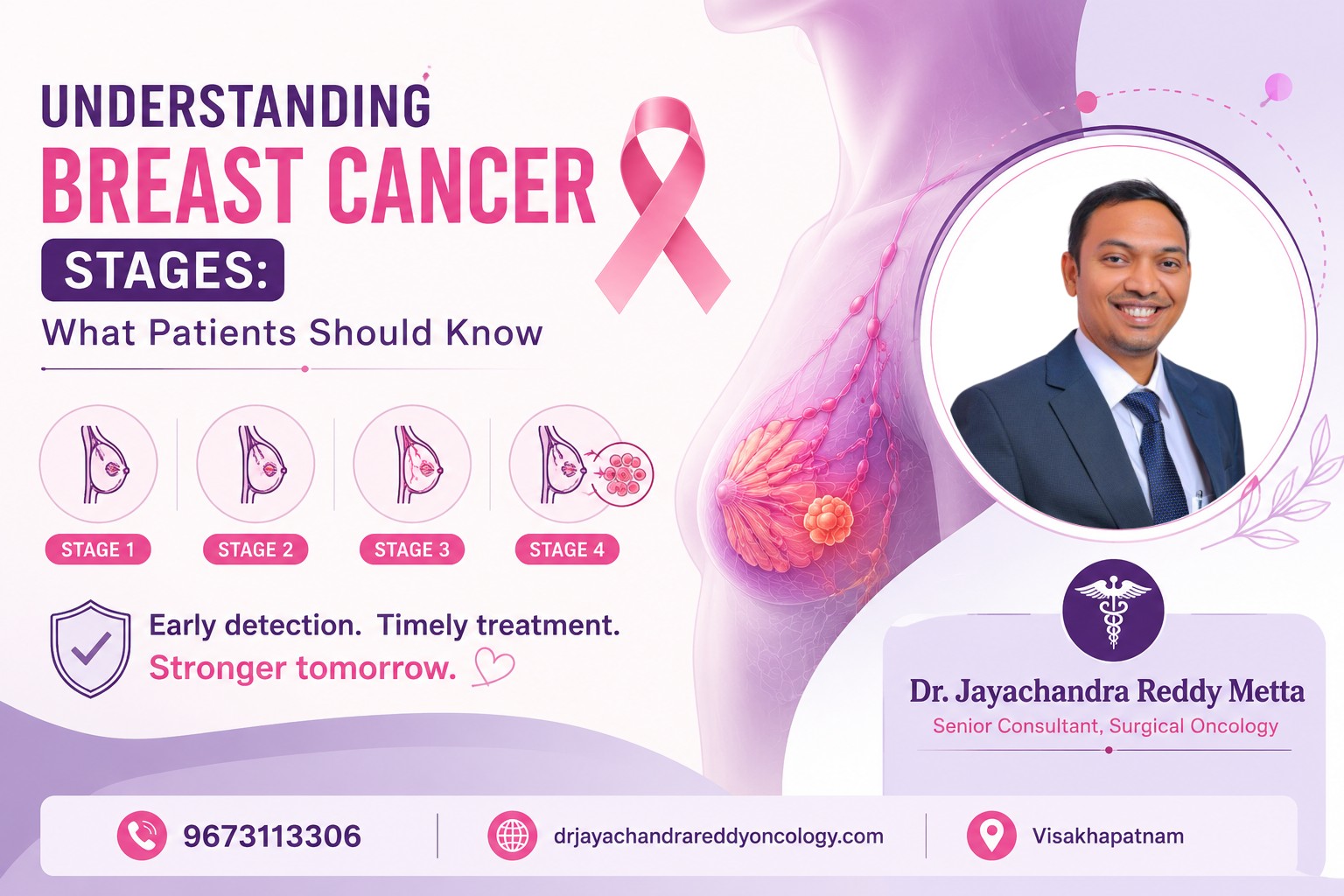
Visual representation by Dr. Metta Jayachandra Reddy – Cancer Specialist in Vizag
Understanding Breast Cancer Stages: What Patients Should Know
A breast cancer diagnosis can be overwhelming, and one of the first things patients often hear about is the "stage" of their cancer. Understanding breast cancer stages can help patients and families better understand the disease, treatment options, and expected outcomes. Breast cancer staging describes how large the cancer is and whether it has spread beyond the breast. Doctors use staging information to create the most effective treatment plan for each patient.
What Does Breast Cancer Staging Mean?
Cancer staging helps determine:
➜ The size of the tumor
➜ Whether nearby lymph nodes are affected
➜ Whether cancer has spread to other parts of the body
➜ The most appropriate treatment options
➜ The likely prognosis
The earlier breast cancer is detected, the greater the chance of successful treatment.
How Is Breast Cancer Staged?
Doctors use information from:
➜ Physical examinations
➜ Mammograms and imaging tests
➜ Ultrasound scans
➜ MRI scans
➜ Biopsy results
➜ PET or CT scans when needed
Based on these findings, the cancer is assigned a stage from 0 to IV (4).
Stage 0 Breast Cancer
Stage 0 is considered the earliest form of breast cancer.
What Happens?
Abnormal cells are present within the milk ducts but have not spread into surrounding breast tissue.
This condition is often called:
Ductal Carcinoma In Situ (DCIS)
Key Points
◆ Highly treatable
◆ Has not invaded nearby tissues
◆ Excellent outcomes when treated early
Stage I Breast Cancer
Stage I indicates an early invasive breast cancer.
What Happens?
The cancer has spread beyond the ducts or lobules into nearby breast tissue but remains small.
The tumor is generally:
Less than 2 centimeters in size
Lymph node involvement may be minimal or absent.
Key Points
◆ Early-stage cancer
◆ High treatment success rates
◆ Often managed with surgery and additional therapies when required
Stage II Breast Cancer
Stage II breast cancer is still considered potentially curable and may involve larger tumors or nearby lymph nodes.
What Happens?
The tumor may:
Be larger than Stage I
Involve nearby lymph nodes under the arm
Key Points
◆ Localized disease
◆ Effective treatment options available
◆ Surgery, chemotherapy, radiation, or targeted therapies may be recommended
Stage III Breast Cancer
Stage III is known as locally advanced breast cancer.
What Happens?
The cancer has spread more extensively to nearby tissues or lymph nodes but has not spread to distant organs.
Possible findings include:
Larger tumors
Multiple lymph node involvement
Extension into nearby chest wall or skin
Key Points
◆ More advanced but often treatable
◆ Usually requires a combination of treatments
◆ Surgery often remains an important part of care
Stage IV Breast Cancer
Stage IV breast cancer is also called metastatic breast cancer.
What Happens?
The cancer has spread beyond the breast and nearby lymph nodes to distant organs such as:
Bones
Liver
Lungs
Brain
Key Points
◆ Requires specialized treatment
◆ Focuses on controlling disease and improving quality of life
◆ Many patients live meaningful and productive lives with modern therapies
Does a Higher Stage Mean There Is No Hope?
Absolutely not.
Advances in cancer treatment have significantly improved outcomes for many patients, even those diagnosed at more advanced stages.
Modern treatment options include:
◆ Surgery
◆ Chemotherapy
◆ Radiation therapy
◆ Hormone therapy
◆ Targeted therapy
◆ Immunotherapy
Many patients respond well to treatment and continue to lead active lives.
Why Early Detection Matters
Breast cancer found at an early stage is often easier to treat and may require less extensive treatment.
Early detection can help:
➜ Improve survival rates
➜ Increase treatment options
➜ Reduce complications
➜ Improve quality of life
Regular screening and prompt evaluation of symptoms remain essential.
Warning Signs of Breast Cancer
Women should seek medical attention if they notice:
➜ A breast lump
➜ Changes in breast shape or size
➜ Nipple discharge
➜ Skin dimpling
➜ Nipple inversion
➜ Persistent breast pain
➜ Swelling in the underarm area
Any unusual breast change should be evaluated by a healthcare professional.
Importance of Regular Screening
Screening helps detect breast cancer before symptoms appear.
Depending on age and risk factors, doctors may recommend:
◆ Mammography
The most common screening test for breast cancer.
◆ Clinical Breast Examination
Performed by a healthcare professional.
◆ Breast Self-Awareness
Being familiar with normal breast appearance and feel can help women notice changes early.
Expert Breast Cancer Care in Visakhapatnam
Dr. Jayachandra Reddy, experienced Surgical Oncologist in Visakhapatnam, provides expert evaluation, diagnosis, breast cancer surgery, cancer screening guidance, second opinions, and personalized treatment planning.
If you have concerns about a breast lump, abnormal imaging results, or a recent diagnosis, timely consultation can help you understand your options and make informed decisions about your care.
Schedule your consultation today for expert breast cancer evaluation and personalized oncology care.
UPHOLDING INTEGRITY IN MEDICAL PRACTICE
Copyright 2026 | Dr. Jayachandra Reddy | All Rights Reserved | Designed by BrandUp Vizag

WOULD YOU LIKE TO BECOME ONE OF OUR DONORS?
