What Happens During Cancer Surgery? A Patient Guide
- Home
- Uncategorized
- What Happens During Cancer Surgery? A Patient Guide
Transforming Lives with Compassionate Cancer Care and Surgical Excellence!


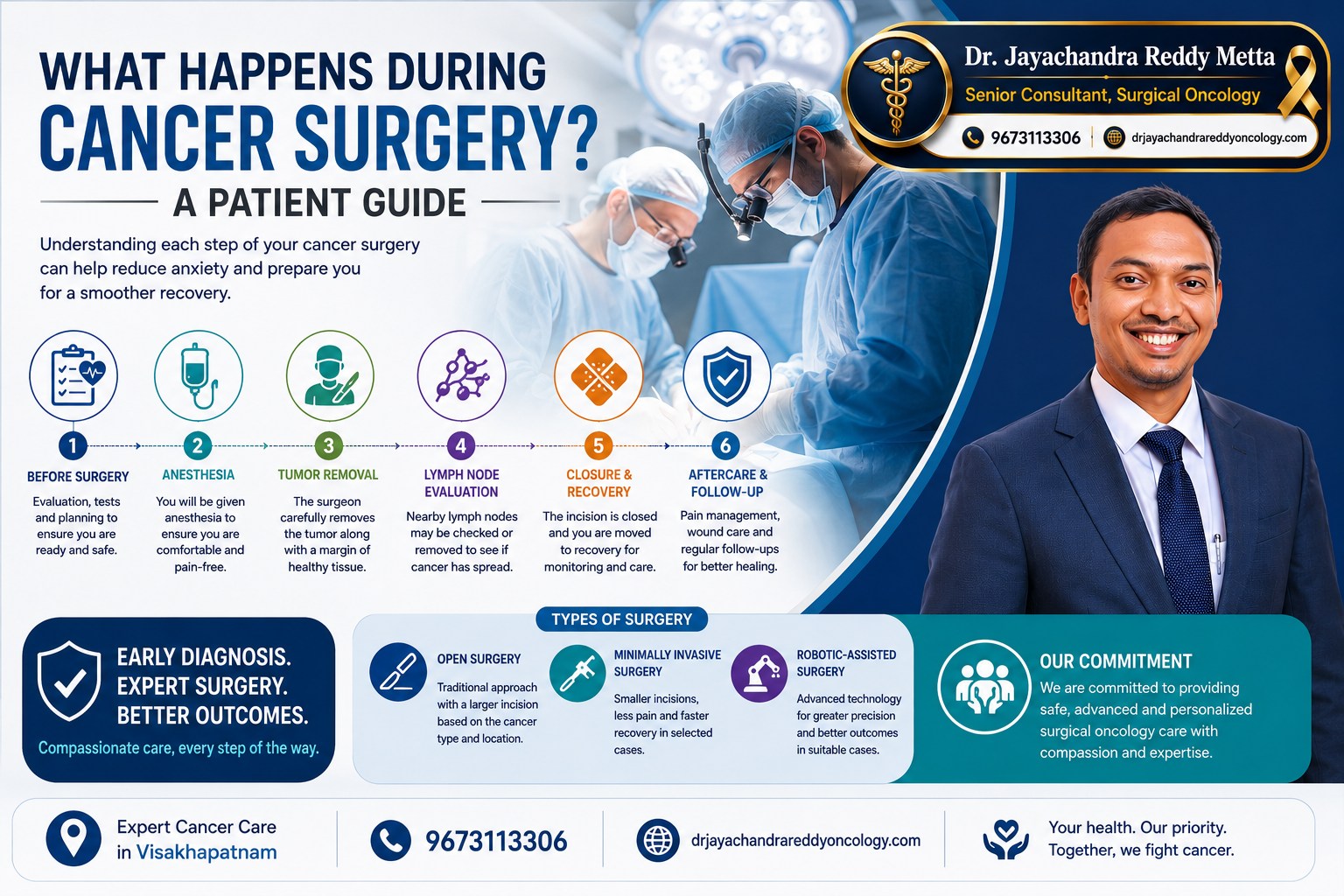
Graphic representation by Dr. Metta Jayachandra Reddy – Cancer Specialist in Vizag
What Happens During Cancer Surgery? A Patient Guide
Hearing that you may need cancer surgery can feel overwhelming. Many patients and families have questions about what happens before, during, and after the procedure. Understanding the process can help reduce fear and prepare you for treatment with confidence. Cancer surgery is often an important part of cancer treatment and may be performed to remove tumors, confirm diagnosis, prevent spread, or improve quality of life.
What is Cancer Surgery?
Cancer surgery involves removing cancerous tissue from the body. Depending on the type and stage of cancer, surgery may also involve removing nearby lymph nodes or affected tissues.
Surgical treatment is commonly used for cancers affecting:
* Breast
* Oral cavity
* Thyroid
* Colon and rectum
* Stomach
* Soft tissues and other organs
Modern surgical techniques aim to remove cancer effectively while preserving as much healthy tissue as possible.
Why is Cancer Surgery Performed?
Cancer surgery may be recommended for several reasons:
◆ To Remove the Tumor
The primary goal is often to remove cancer from the body.
◆ To Confirm Diagnosis
In some cases, surgery or biopsy helps confirm whether a growth is cancerous.
◆ To Prevent Cancer Spread
Removing cancer early may help reduce the chance of spreading to nearby tissues or organs.
◆ To Relieve Symptoms
Certain surgeries help reduce pain, bleeding, swallowing difficulty, or other cancer-related symptoms.
Before Cancer Surgery
Before the procedure, your doctor may recommend:
* Blood tests
* Imaging scans (CT, MRI, PET scan, etc.)
* Biopsy reports
* Fitness evaluation for surgery
* Discussion about the treatment plan and recovery
Your surgeon will explain:
* The type of surgery needed
* Possible risks and benefits
* Hospital stay duration
* Recovery expectations
Patients are also guided regarding fasting, medications, and preparation before surgery.
What Happens During Surgery?
The exact procedure depends on the type and location of cancer.
Generally, cancer surgery involves:
◆ Anesthesia
You will receive anesthesia so you remain comfortable and pain-free during the procedure.
◆ Tumor Removal
The surgeon carefully removes the tumor along with a margin of healthy tissue to help reduce recurrence risk.
◆ Lymph Node Evaluation
Nearby lymph nodes may sometimes be removed or tested to check if cancer has spread.
◆ Reconstruction if Needed
In certain cases, reconstructive procedures may be performed to improve function or appearance after tumor removal.
Types of Cancer Surgery
◆ Open Surgery
Traditional surgery involving a larger incision for direct access to the affected area.
◆ Minimally Invasive Surgery
Laparoscopic or minimally invasive procedures use smaller incisions and specialized instruments for faster recovery in selected cases.
◆ Robotic-Assisted Surgery
Some advanced procedures may be performed using robotic technology for improved precision.
What Happens After Cancer Surgery?
After surgery, patients are monitored closely during recovery.
Post-surgical care may include:
– Pain management
– Wound care
– Medications
– Nutritional support
– Follow-up consultations
Recovery time depends on:
– Type of surgery
– Overall health
– Cancer stage
– Individual healing response
Some patients may also require additional treatments such as chemotherapy or radiation therapy after surgery.
Common Questions Patients Ask
Is cancer surgery painful?
Pain is managed with medications and supportive care. Most patients experience gradual improvement during recovery.
How long is hospital stay?
Hospital stay varies depending on the procedure and recovery progress.
Can surgery cure cancer?
In many early-stage cancers, surgery can play a major role in successful treatment outcomes.
Will I need additional treatment?
Some patients may require chemotherapy, radiation, or follow-up monitoring depending on pathology results.
Importance of Early Treatment
Early diagnosis and timely surgery often improve outcomes and increase treatment success rates. Delaying medical evaluation may allow cancer to progress further.
If you notice unusual symptoms or have abnormal reports, consult a specialist promptly.
Expert Surgical Oncology Care in Visakhapatnam
Dr. Jayachandra Reddy, experienced Surgical Oncologist in Visakhapatnam, provides advanced cancer evaluation, surgical oncology care, second opinions, and compassionate treatment guidance for patients in Vizag and surrounding areas.
Every patient deserves clear guidance, personalized care, and confidence throughout their treatment journey.
Schedule your consultation today for expert cancer care and surgical oncology guidance.
UPHOLDING INTEGRITY IN MEDICAL PRACTICE
Copyright 2026 | Dr. Jayachandra Reddy | All Rights Reserved | Designed by BrandUp Vizag

WOULD YOU LIKE TO BECOME ONE OF OUR DONORS?
